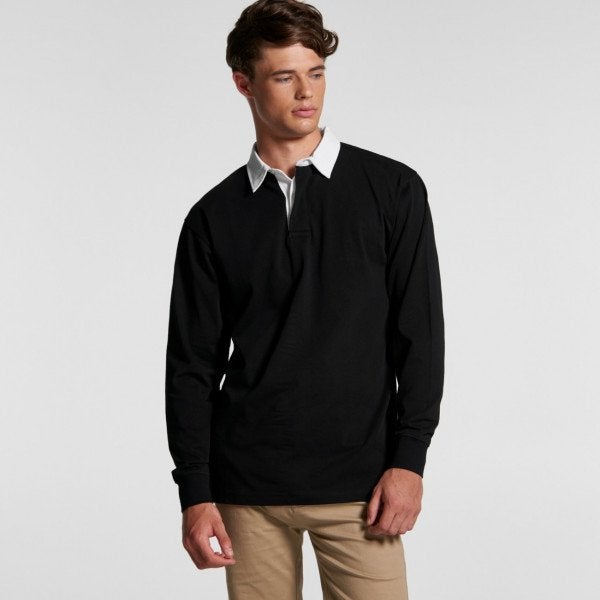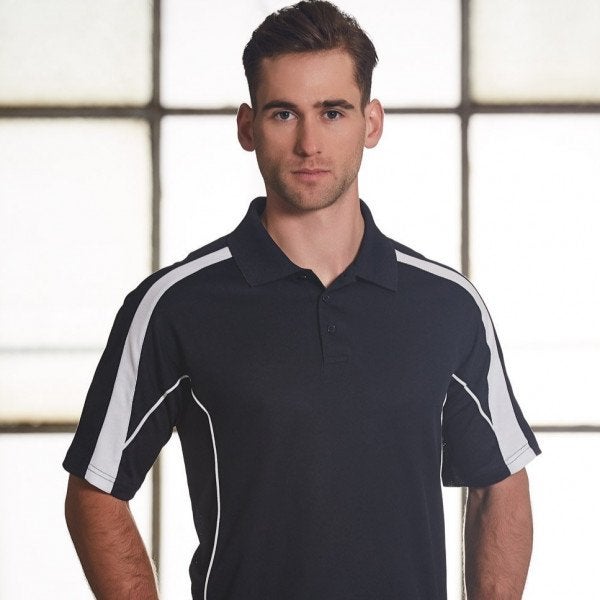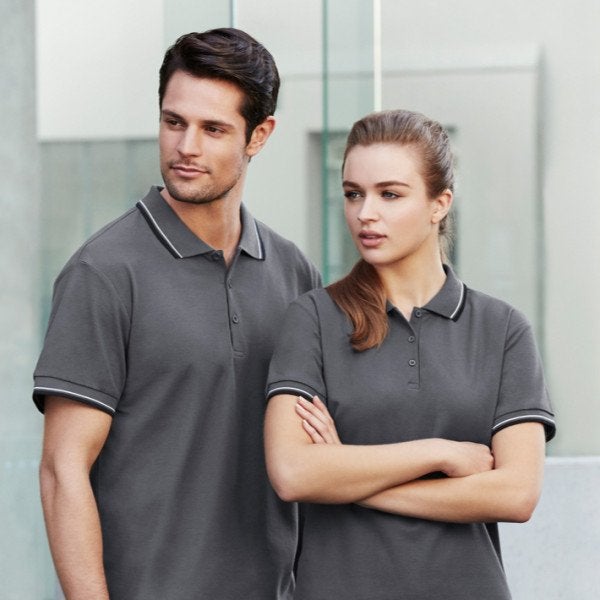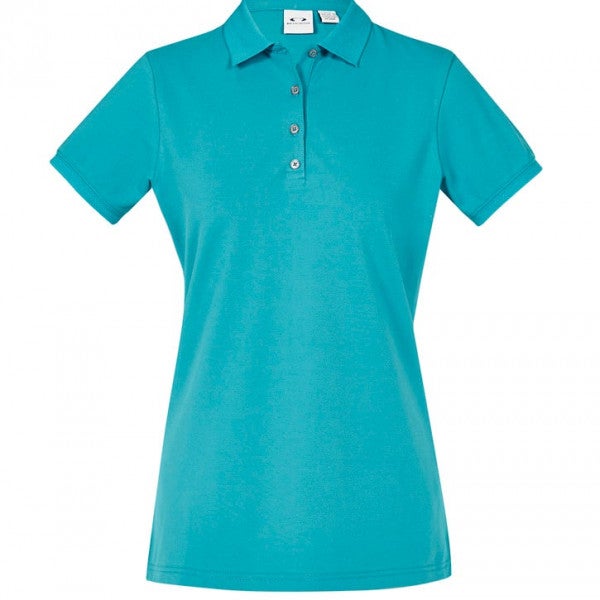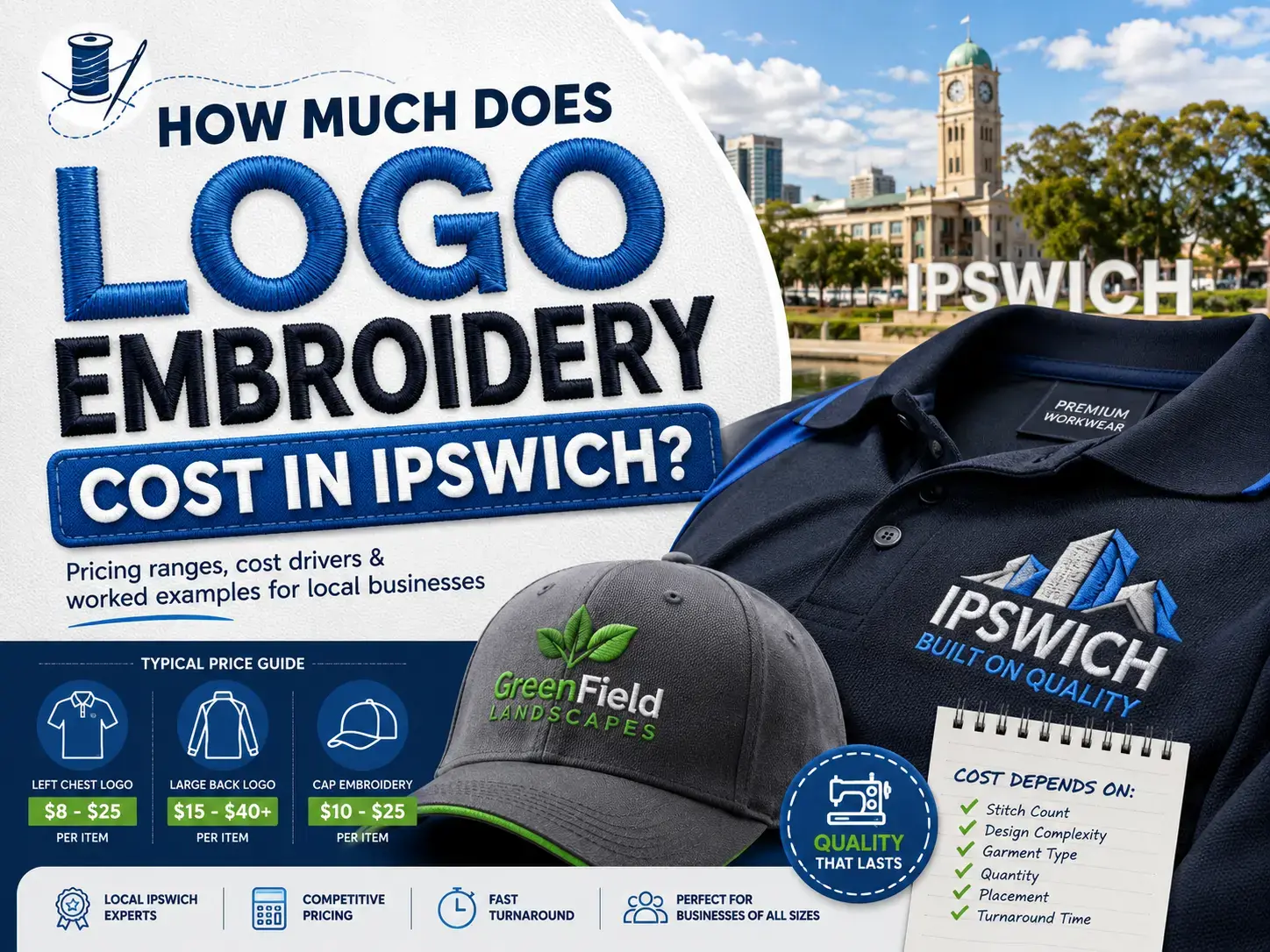
Logo embroidery costs vary because every design and garment is different. For initial budgeting, Ipswich businesses can allow about $8-$25 per item for a standard small embroidered logo, excluding the garment. A new logo may also require a one-off digitising fee of about $30-$120 or more. A supplied and embroidered polo commonly falls around $35-$65 per item. Your final price depends on stitch count, quantity, garment, placement and turnaround.
There is no standard logo embroidery cost in Ipswich. Local embroidery businesses usually need to see the artwork before confirming a price. This is reasonable. A simple logo may use fewer than 9,000 stitches. A large or dense logo can need 15,000 to 20,000 stitches or more.
Cost component | Market Range | What it normally covers |
Blank garment | No single average. Budget polos may start near $18; premium corporate polos can be $40+. | The undecorated polo, shirt, jacket, cap or hi-vis item. |
Logo digitising | $30-$120+ one-off | Converts a logo into machine stitch instructions. Complex or large artwork can cost more. |
Standard left-chest logo | $8-$25 per item | A small business logo, often around 5,000-9,000 stitches. Garment usually excluded. |
Large front or back logo | $15-$40+ per item | A larger or denser design. Very high stitch counts can exceed this range. |
Employee name | $5-$15 per item | A name in a standard font and position. |
Cap-front embroidery | $10-$25 per cap | Standard flat embroidery on a cap front. Cap may be extra. |
Supplied and embroidered polo | $35-$65 per polo | A published market range combining a polo and one logo placement. |
Additional position | A sleeve, cap side, second chest logo or other extra position | Usually charged as another embroidery position from $6.90 to $26.90 ex GST for common order sizes and stitch counts. |
Rush production | Quote only | Availability and surcharge vary. Published examples range from 20% to 50%, but this is not a universal Ipswich rate. |
Use this formula when you compare quotes:
Total order cost = garments + digitising + embroidery + extras
Extras may include employee names, extra logo positions, artwork changes, freight and rush production. Check whether the quote includes GST. Do not assume it does.
Two logos can be the same physical size and have very different production costs. A simple wordmark may use far fewer stitches than a badge with a dense background, border, icon and small tagline. More stitches increase machine time. Extra underlay, thread changes and careful sequencing can also add work.
Very small lettering may not sew cleanly. A good embroidery specialist may recommend removing a tiny tagline, thickening a fine font or creating a simplified uniform version of the logo. That is not a loss of quality. It is production design that protects readability.
Do not compare suppliers using only the advertised per-shirt price. A cheaper quote may exclude:
logo digitising or artwork cleanup
the garment itself
GST
a second logo position
employee names
freight or local delivery
stitch proofs or samples
rush production
Ask for an itemised quote. That is the only reliable way to compare like with like.
Stitch count is one of the clearest cost drivers because it affects sewing time. A 5,000-9,000-stitch design can cost less than a 15,000-20,000-stitch design at the same quantity. Complex logos may also need more underlay, trims and colour changes.
Thread colour count matters, but it is not always the main driver. Six colours in a compact, open logo may sew faster than two colours in a dense block. Ask about estimated stitch count and finished dimensions, not colours alone.
Position | Typical use | Cost and production note |
Left chest | Polos, work shirts, jackets | Usually the most efficient professional placement. |
Sleeve | Secondary logo or sponsor | Adds a second setup and handling step. |
Centre front | Aprons, selected outerwear | Space, seams and garment construction must be checked. |
Cap front | Staff caps and event headwear | The curved area may need a cap-specific embroidery file. |
Jacket back | High-visibility branding | Larger size and stitch count usually increase cost. |
Multiple positions | Logo, name and secondary branding | Each position is normally priced separately. |
Expert recommendation
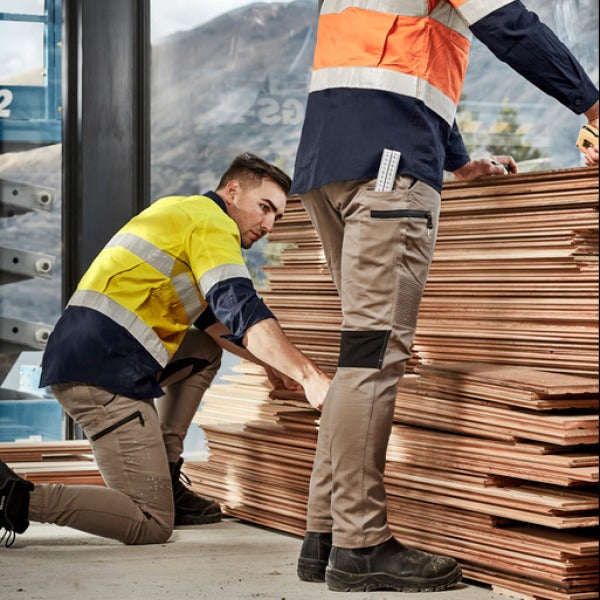
For most Ipswich business uniforms, a restrained left-chest logo offers the best balance of visibility, professional presentation, fabric performance and cost.
The per-item rate can fall as quantity rises. The setup work is spread across more garments. The production run is also more efficient.
For example, The Print Studio lists a 5,000–9,000-stitch position at:
$18.90 ex GST each for 5–9 items;
$12.90 ex GST each for 10–19 items;
$9.90 ex GST each for 20–49 items; and
$6.90 ex GST each for 50–99 items.
This does not mean every Ipswich supplier uses the same price breaks. It shows why a 50-shirt order should not be estimated by multiplying a six-shirt rate.
The logo must be engineered for the garment, not only for the artwork. Common considerations include:
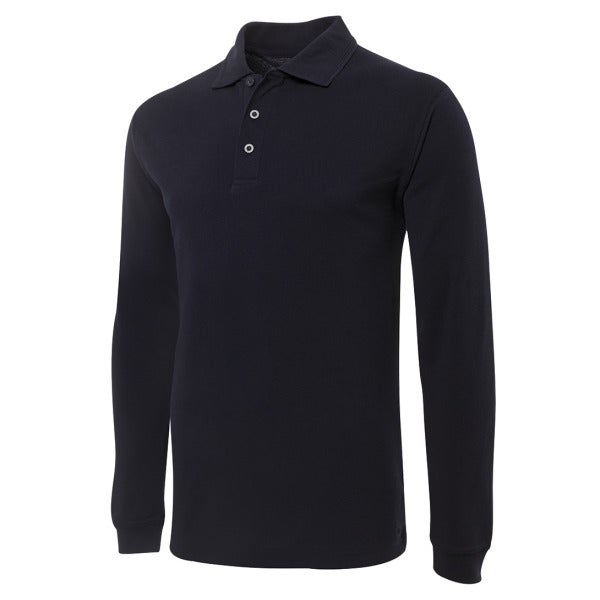
Cotton polos usually support embroidery well, but heavy designs can still distort the fabric.
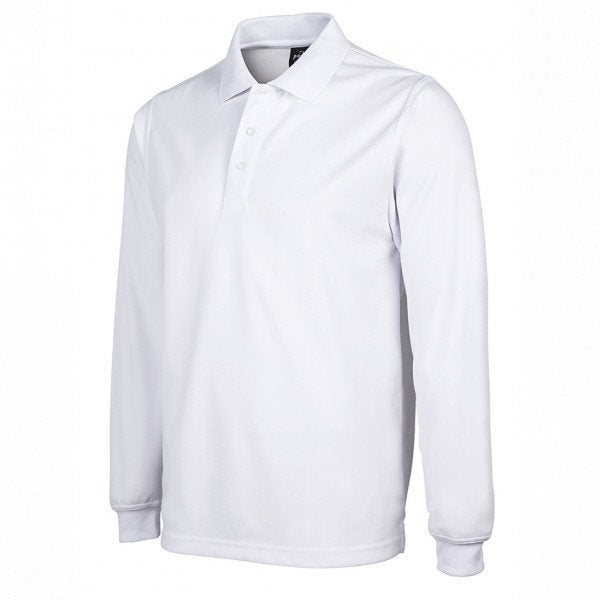
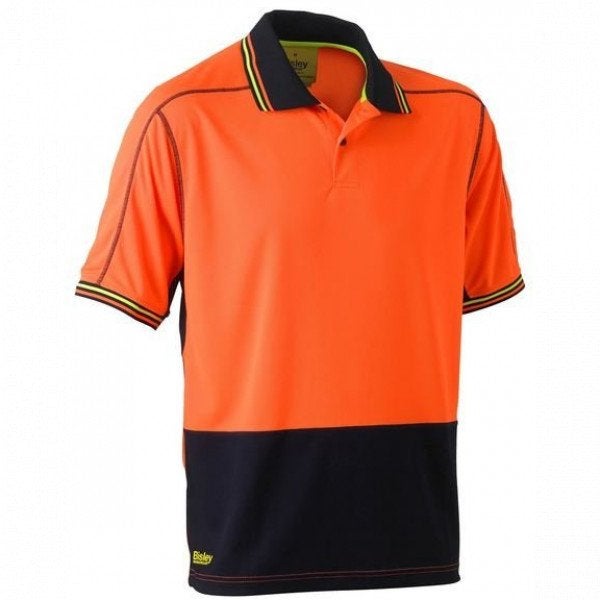
Polyester performance polos suit active teams and dry quickly. Light fabric needs the correct backing.
Work shirts are often stable, but pockets, seams and vents can limit placement.
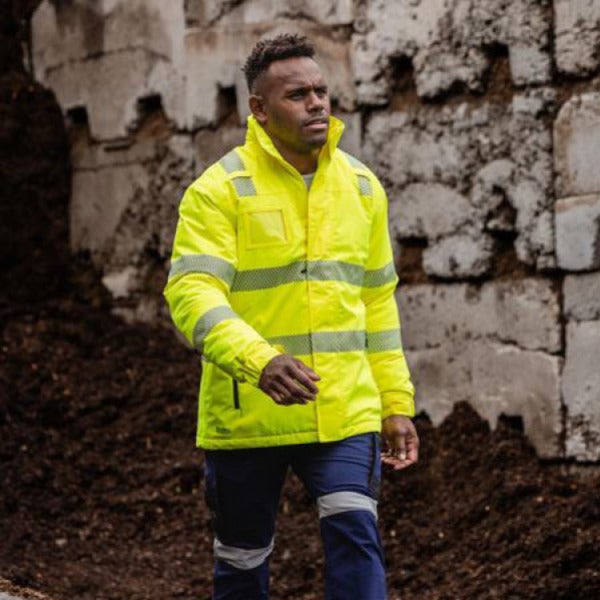
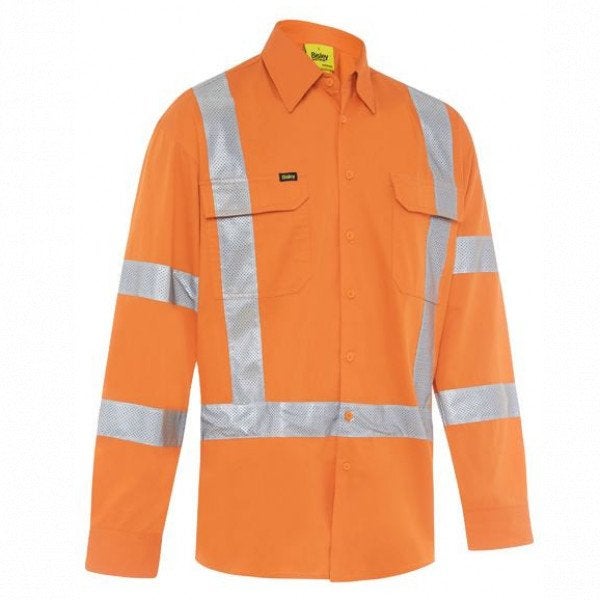
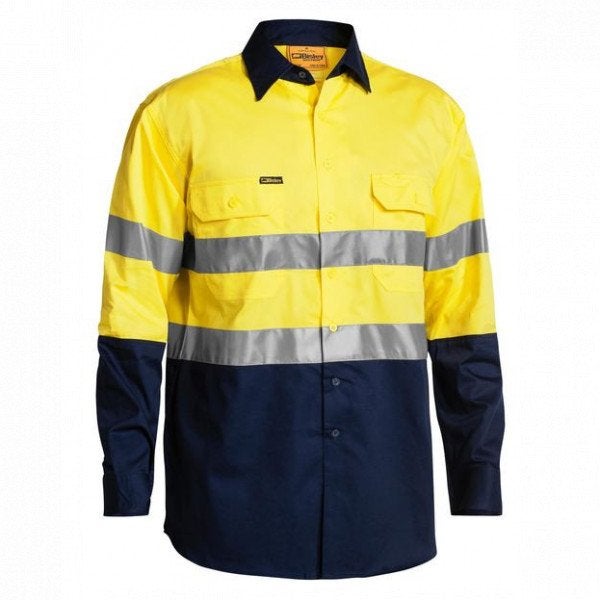
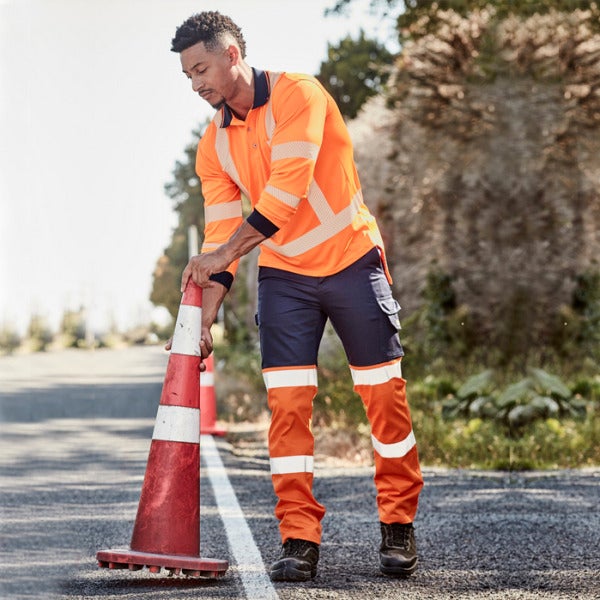
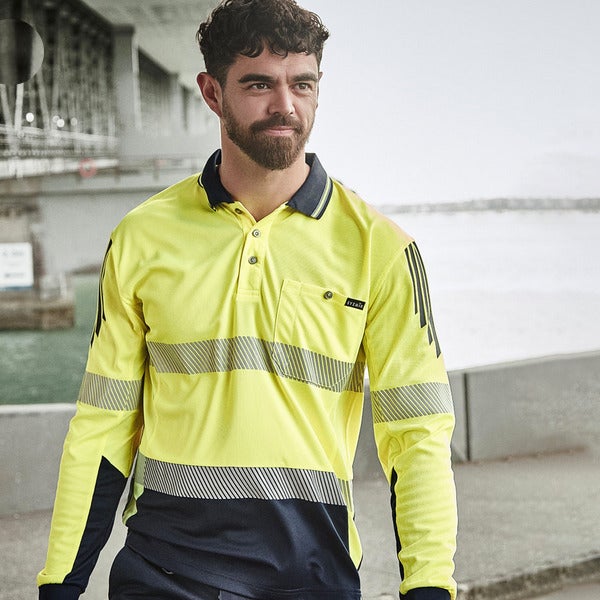
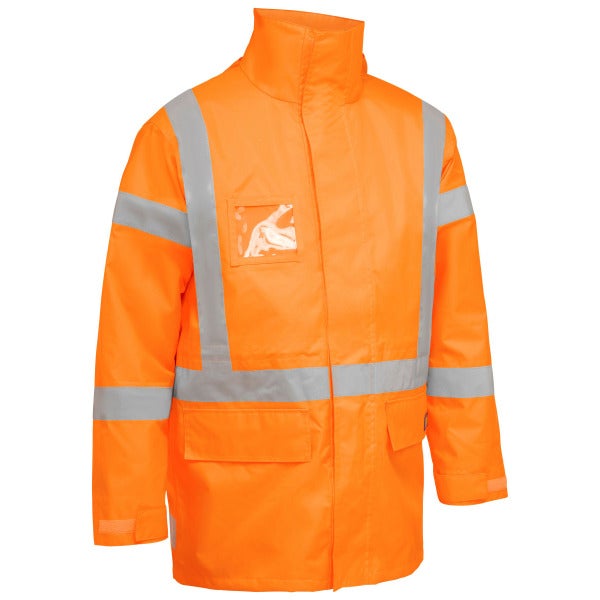
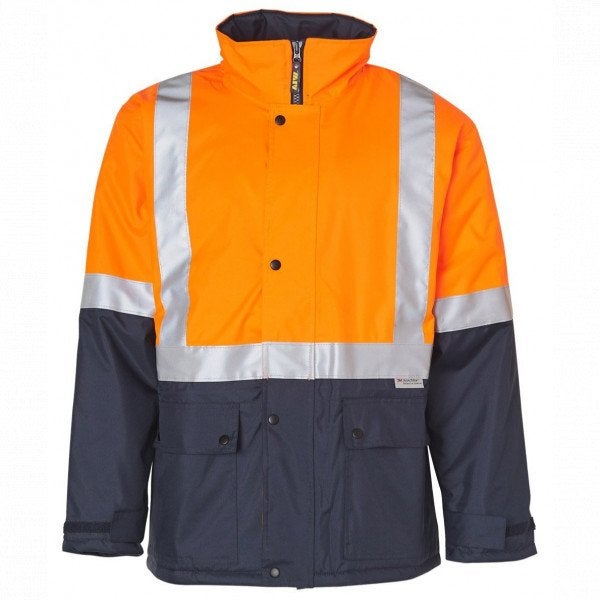
Hi-vis garments need careful logo placement so branding does not interfere with required visible areas.
Softshell jackets can give a clean finish, but dense outer layers may need different settings.
Fleece often needs topping or extra control so stitches do not sink into the surface.
Caps have curved panels and seams. The logo may need a separate embroidery sequence.
Lightweight stretch garments may pucker if the design is too dense or the backing is wrong.
Do not choose a uniform from a product photo alone. Check the fabric, fit, size range and decoration area first.
Embroidery digitising converts a visual logo into machine instructions. The file controls stitch direction, density, sequence and thread changes. This is not the same as saving a JPG in another format. It is production work. A supplier may charge a one-time setup fee for it.
An approved file can often be reused for a reorder. However, a major size change, a new garment type or a move from a flat polo to a curved cap may require an adjustment. Ask whether that adjustment has a fee.
Allow time for garment supply, artwork checking, approval and production. Fully Promoted Springfield’s turnaround time for most logo embroidery orders take around 5–10 business days after artwork approval, garment confirmation and payment arrangements. Stock, quantity and complexity can extend that time. See the current Springfield embroidery turnaround guide.
Rush work may be possible. It should never be assumed. Ask before placing the order, especially if uniforms are needed for a site start, trade event or opening date.
Scenario:
six plain performance polos at $15.20 each;
one 5,000–9,000-stitch left-chest logo at $18.90 per item;
one new $75 digitising setup; and
standard production.
Item | Calculation | Estimated cost ex GST |
Six polos | 6 × $15.20 | $91.20 |
Left-chest embroidery | 6 × $18.90 | $113.40 |
New logo setup | 1 × $75 | $75.00 |
Estimated subtotal |
| $279.60 |
GST | 10% | $27.96 |
Estimated total including GST |
| $307.56 |
This works out to $51.26 including GST per completed polo in this model. A higher-grade polo, a denser logo or delivery would increase the total.
Scenario:
twenty hi-vis shirts at $30.90 each;
one 5,000–9,000-stitch left-chest logo at $9.90 per item;
one $75 digitising setup; and
standard production.
Item | Calculation | Estimated cost ex GST |
Twenty hi-vis shirts | 20 × $30.90 | $618.00 |
Left-chest embroidery | 20 × $9.90 | $198.00 |
New logo setup | 1 × $75 | $75.00 |
Optional employee names | 20 × $5-$15 | $100-$300 |
GST | 10% | $89.10 |
Decoration subtotal | Excludes garments, GST and freight | $373-573 |
The garment cost may be the largest variable. Confirm the exact workwear product, size range, reflective-tape layout and site requirements before ordering.
Scenario:
fifty men’s and women’s performance polos at $15.20 each;
one consistent 5,000–9,000-stitch logo at $6.90 per item;
one $75 digitising setup; and
standard production.
Item | Calculation | Estimated cost ex GST |
Fifty polos | 50 × $15.20 | $760.00 |
Left-chest embroidery | 50 × $6.90 | $345.00 |
New logo setup | 1 × $75 | $75.00 |
Estimated subtotal |
| $1,180.00 |
GST | 10% | $118.00 |
Estimated total including GST |
| $1,298.00 |
This example is $25.96 including GST per completed polo. The lower per-item result comes from the larger quantity.
For a 50-piece order, arrange a size trial or sample approval first. A low unit price is worthless if ten garments do not fit.
Suppose an event team needs twenty caps and twenty polos. A public blank-garment example is $5.19 ex GST per cap at the 20–49 quantity tier and $15.20 ex GST per polo. If both groups attract a $9.90 embroidery rate, the calculation is:
caps: 20 × $5.19 = $103.80 ex GST;
polos: 20 × $15.20 = $304.00 ex GST;
embroidery: 40 × $9.90 = $396.00 ex GST; and
one setup: $75 ex GST.
The model total is $878.80 ex GST, or $966.68 including GST, before freight or a separate cap-file adjustment.
The cap logo may need different stitch settings because the surface is curved. Do not assume one polo file will run on a cap without changes.
Local weather does not increase embroidery cost by itself. It changes which garment is practical and how often it may be washed. That can change the overall uniform budget.
The Bureau of Meteorology's Greater Brisbane 2025 summary reports that Amberley AMO averaged a 28.0°C maximum during 2025, reached 40.0°C on 27 October and recorded 1,050.2 mm of rain, or 121% of its long-term average. For Ipswich teams, that makes breathability, moisture management, drying time, colourfastness and wash durability practical buying criteria.
Outdoor crews may prefer lighter performance fabrics. Office, healthcare and customer-facing teams may prioritise structure and a polished finish. The right solution may use two coordinated garment types with the same approved logo specification.
With a gross regional product (GRP) of $16.81 billion in 2026 and 99,323 local jobs, Ipswich continues to be one of Queensland's fastest-growing business hubs. The strongest year-on-year job growth was recorded in the construction, manufacturing, and transport, postal and warehousing sectors, industries where branded workwear and custom uniforms play an essential role in building a professional image and maintaining team consistency.
Common uniform needs include:
construction and civil crews that need site-appropriate hi-vis workwear
manufacturing teams that need durable garments for repeated washing
transport and warehouse employees who need visibility and easy role identification
mobile trades that need professional branding at homes and commercial sites
healthcare and allied health teams that need clean, consistent presentation
hospitality and retail teams that need comfortable customer-facing uniforms
Businesses building a consistent range can also review custom workwear options for Greater Springfield and the broader branded apparel range.
Embroidery is not always the cheapest decoration method. The best method depends on the artwork, garment and quantity.
Method | Usually best for | Main cost issue | Durability |
Embroidery | Workwear, polos, caps, jackets and corporate uniforms | Digitising plus stitch-based production | High for suitable garments |
Screen printing | Bulk t-shirts, event apparel, large front or back designs | Setup becomes more efficient at volume | High when correctly applied and washed |
DTF printing | Detailed full-colour designs and short runs | Transfer size and quantity | Depends on application and garment care |
Remove tiny taglines and unnecessary detail. Do not shrink a complicated logo until it becomes illegible. Create a clean uniform version that preserves the brand's important elements.
A consistent left-chest placement simplifies approvals, production and future reorders. Add a second position only when it serves a clear purpose.
A monthly or quarterly order can be more efficient than placing isolated one-item orders. Keep a small approved buffer of common sizes if staff turnover makes this practical.
Record the garment brand, product code, colour, logo size, position, thread colours and employee-name format. This reduces decisions and mistakes on each reorder.
A sample or size trial can prevent expensive remakes. A stitch sample is valuable when the logo includes fine text, dense areas or unusual fabric.
Vector artwork is normally best. Supply AI, EPS or vector PDF files where available. A high-resolution transparent PNG may work for simple artwork if the supplier approves it.
Do not send a small screenshot taken from social media. It may be useful as a visual reference, but it is not reliable production artwork.
Puckering can result from excessive stitch density, insufficient backing, lightweight or stretchy fabric, an oversized design, poor hooping or incorrect tension.
The solution is not always more stitches. It may require a lighter design, better backing or a different garment.
Tiny text often looks acceptable on a screen but fails in thread. Improve the result by:
remove tiny taglines that are not essential
increase letter height where the brand permits it
avoid very thin font strokes
check spacing between letters
approve a physical stitch sample for complex designs
Keep a permanent specification with:
the approved embroidery file and version date
finished logo width and height
thread brand and colour numbers
garment supplier, style code and colour
placement measurements from seams, pockets or plackets
an approval photograph or physical sample
“Use the same logo as last time” is not a useful production specification if nobody can identify the old file or garment.
Branding must not cover reflective tape or reduce required fluorescent background areas. Do not assume that every decoration position is compliant on every garment. Check the specific garment certification, the applicable workplace requirements and the site or principal contractor's rules before approval.
Follow the garment label first. Then use these general practices:
wash the garment inside out;
close zips and hook-and-loop fasteners;
use a mild detergent;
avoid chlorine bleach unless the care label permits it;
do not iron directly over the embroidery;
air-dry or use the recommended low-heat setting;
do not pull loose threads; and
wash heavily soiled workwear separately from office uniforms.
Frequent washing makes garment quality and correct embroidery setup important. Poor care can shorten the life of both the fabric and the decoration.
Send the supplier:
the best available logo file;
required quantity;
garment type and preferred brand, if known;
garment colour;
size breakdown;
required logo dimensions;
each embroidery position;
employee names, if needed;
delivery or collection preference;
required completion date;
whether the job is new or a reorder.
The more complete the brief, the more useful the quote will be.
Ask:
Is digitising included?
Is GST included?
Are the garments included?
Is freight or delivery included?
Will I receive an artwork proof or stitch sample?
Can the embroidery file be reused?
Will a cap or jacket need a modified file?
What happens if a garment is out of stock?
Are larger sizes charged differently?
What is the policy if an approved design needs to be remade?
A sensible logo cost range is about $8-$25 per garment for a standard small logo, excluding the garment. Small orders, dense logos and high stitch counts can cost more. Ask for a job-specific quote.
A Standard digitising around $30-$120 or more. It is usually a one-off setup for a particular logo size and application.
Usually not if the supplier can reuse the same approved file at the same size and placement. A cap, large back design or major logo change may require a new or adjusted file.
A standard left-chest logo is usually the most efficient professional option for polos, work shirts and jackets.
It can, because colour changes take time. However, stitch count, density, design size and machine time are often more important than colour count alone.
A useful quote should make the full cost easy to understand. Send your logo, garment preference, quantity, size breakdown, positions and required date. The team can then recommend the most suitable garment and decoration method for your budget and working conditions.
Discuss your order with Fully Promoted Springfield or request guidance for branded uniforms and promotional products in Ipswich.
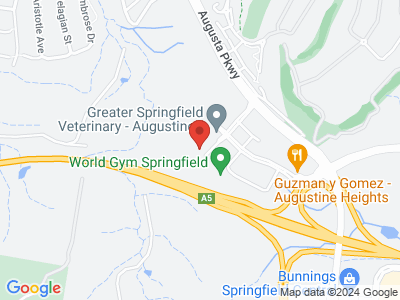
Fully Promoted Springfield
The Business Hub, Unit 5 23 Technology Drive
Augustine Heights Queensland 4300




Create exactly the look you want with a variety of branding options. Our experts can help you discover which techniques will best represent your brand and your budget.
Whether it’s embroidery for your garments, screen printing for a run of apparel, or the latest in branding technology with direct to transfer printing, Fully Promoted has you covered.
Contact Fully Promoted today.














Join our winning team and own your future with
Fully Promoted - the largest promotional franchise
in Australia.
Apply Today!
>



 Industries