Lightweight workwear can feel great when you first try it on.
But how will it perform after weeks of climbing scaffolding, kneeling on concrete, crawling through frames, brushing against reinforcing steel and carrying tools across a construction site?
That is where fabric quality and garment construction really matter.
For construction companies, trades, maintenance teams and industrial businesses, workwear needs to handle demanding conditions while remaining comfortable enough for employees to wear throughout the day.
At Fully Promoted Pyrmont, we help businesses across Sydney CBD, Pyrmont, Ultimo, Glebe, Balmain, the Inner West and greater Sydney select workwear that suits their actual working conditions.
The right choice starts with understanding what makes a garment durable.
A pair of work pants may look strong in a catalogue, but appearance alone tells you very little about how they will perform.
Fabric composition, weight, weave and construction all affect durability.
For example, a lightweight stretch garment may feel exceptionally comfortable but may not be the best option for someone regularly working against rough surfaces.
A heavier cotton canvas garment may offer greater abrasion resistance but could feel warmer during physically demanding work.
Neither option is automatically better.
The best choice depends on the job.
When reviewing workwear, consider:
Fabric composition
Material weight, usually measured in GSM
Resistance to abrasion and tearing
Stretch and flexibility
Breathability
Reinforcement at high-wear areas
Washing and maintenance requirements
The goal is to find the right balance between protection, durability and employee comfort.
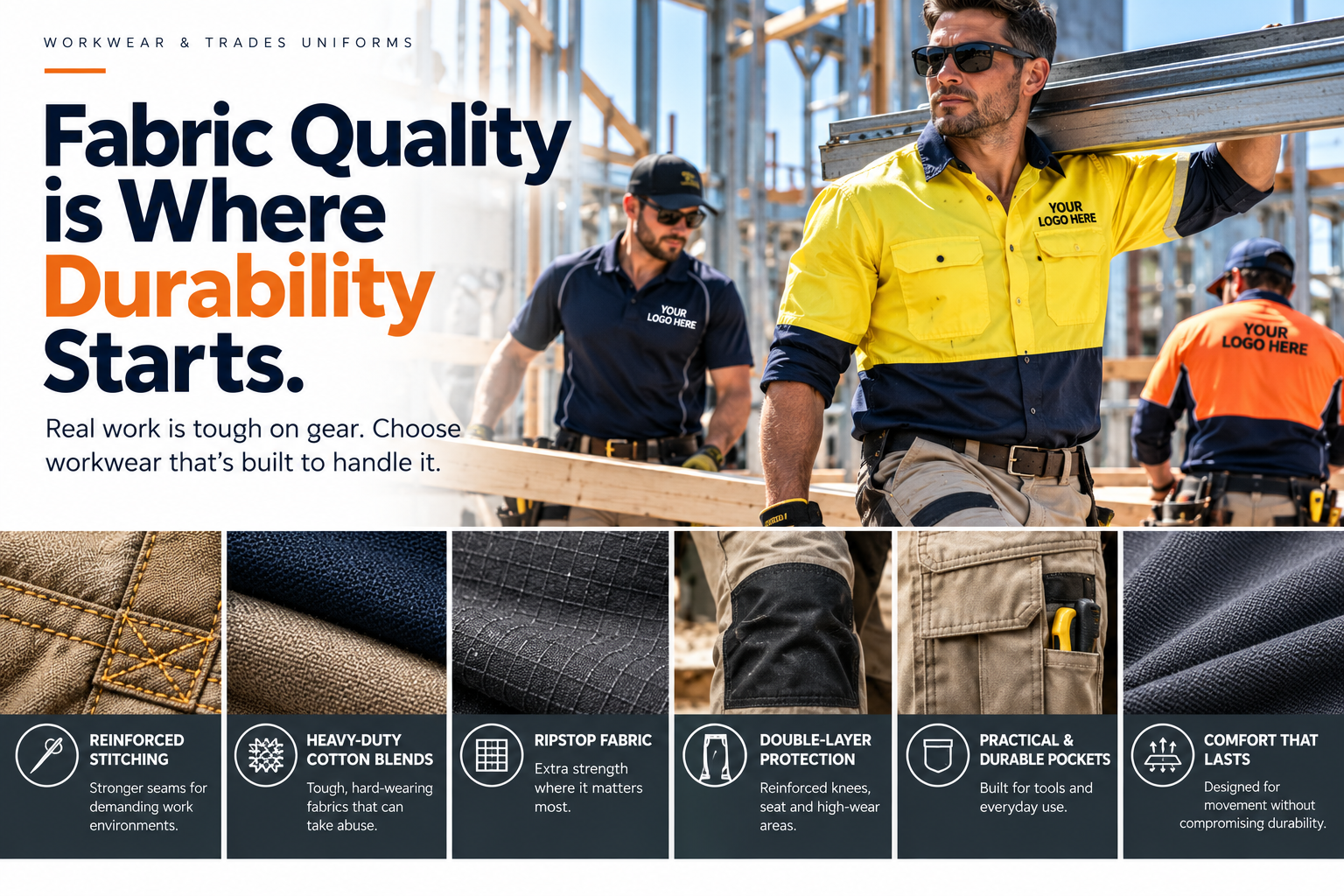
One of the first things to inspect is the stitching.
Workwear experiences repeated stress when employees bend, squat, climb, kneel and carry equipment.
These movements place strain on seams, particularly around the crotch, seat, pockets and knees.
Triple-stitched seams
Multiple rows of stitching can help strengthen areas exposed to repeated movement and strain.
Bar-tacked stress points
Bar tacks are concentrated reinforcement stitches commonly used at pocket openings, belt loops and other areas subject to pulling.
Reinforced crotch seams
Construction workers and tradespeople regularly bend and squat. Strong construction in this area can help reduce premature seam failure.
Durable pocket stitching
Tool pockets and cargo pockets experience additional strain when carrying equipment.
Stitching quality is one of the features that separates basic work pants from garments designed for demanding physical work.
Cotton has been used in workwear for generations because it offers comfort and can be constructed into durable fabrics.
However, not all cotton garments are equally strong.
Fabric weight and weave make a significant difference.
Cotton drill and canvas are commonly used for work pants, shorts and jackets.
Depending on their construction, these fabrics can offer:
Good abrasion resistance
A sturdy feel
Durability for repeated use
Practicality for trade environments
Comfortable everyday wear
Heavier fabrics may be suitable for builders, carpenters, maintenance workers and tradespeople who frequently work against abrasive surfaces.
However, heavier fabric can also increase warmth and restrict movement.
Blended fabrics can offer a useful balance of durability, shape retention and care requirements.
Polyester may contribute to strength, faster drying and reduced creasing, while cotton can provide a familiar feel against the skin.
The exact performance depends on the fabric composition, construction and finish.
For businesses ordering uniforms across different staff roles, blended workwear can be worth considering.
Ripstop is a fabric construction technique designed to help limit the spread of small tears.
It uses a reinforced grid pattern woven into the material.
If a small tear develops, the reinforcing yarns can help prevent it from spreading as easily as it might in some conventional fabrics.
This makes ripstop worth considering for workwear used in demanding environments.
Construction work
Maintenance
Landscaping
Transport and logistics
Outdoor fieldwork
Utility services
Industrial environments
However, ripstop does not mean a garment is tear-proof.
The performance still depends on fibre composition, fabric weight, weave quality and construction.
A lightweight ripstop fabric may resist tear propagation well without necessarily providing the same abrasion resistance as a heavier canvas.
This distinction is important when choosing garments for employees who frequently kneel, crawl or work against rough materials.
Some parts of workwear experience significantly more wear than others.
For many tradespeople, the knees are among the first areas to deteriorate.
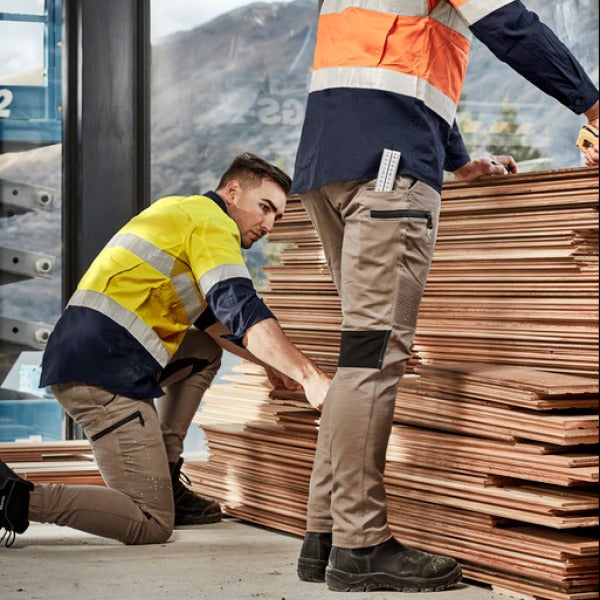
Workers who spend time kneeling on concrete, timber, steel or rough ground place repeated pressure and friction on this part of their pants.
Double-layer knee panels can provide additional resistance against wear.
Some work pants also include internal or external knee-pad pockets, allowing suitable protective inserts to be used.
These features can be particularly valuable for flooring installers, carpenters, electricians, plumbers and construction workers.
Workers regularly sitting on rough surfaces, climbing in and out of vehicles or moving across worksites can place substantial wear on the seat of their pants.
Additional fabric reinforcement can help improve durability in this area.
Tool pockets, cargo pockets and phone pockets should be designed for their intended contents.
Look for reinforced openings, suitable stitching and fabric strong enough to withstand regular use.
A garment with multiple pockets is not necessarily better if those pockets begin tearing after a few weeks.
Comfort and durability do not have to compete.
Modern workwear offers stretch options designed to support movement while retaining a professional, hard-wearing construction.
Stretch may come from elastane fibres, mechanical stretch fabric construction or stretch panels positioned in specific areas.
These features can help employees:
Bend and squat more comfortably
Climb ladders
Move between standing and kneeling
Enter and exit vehicles
Work in confined spaces
However, stretch should be evaluated alongside abrasion resistance, fabric weight and seam quality.
For physically demanding jobs, a reinforced stretch pant may be more suitable than a lightweight fashion-inspired stretch trouser.
The right garment should move with the worker without sacrificing the durability required for the job.
Not every employee needs the same uniform.
A construction supervisor may spend time both on-site and meeting clients. A carpenter may regularly kneel and work against rough surfaces. A warehouse employee may need flexibility for lifting, while a maintenance technician may require multiple functional pockets.
Consider the working environment before selecting garments.
Look for:
Strong fabric construction
Reinforced seams
Durable pants and shorts
Abrasion-resistant materials
Functional pockets
Appropriate high-visibility options where required
Look for:
Comfortable stretch
Reinforced knees
Practical pockets
Durable seams
Suitable fabric for kneeling and bending
Job-specific safety requirements
Electrical work and other specialised environments may require clothing with additional protective properties. Ordinary workwear should not be assumed to provide arc-flash or flame protection.
Look for:
Abrasion-resistant fabrics
Practical stretch
Weather-appropriate garments
Suitable ventilation
Durable pockets
Appropriate sun protection
Look for:
Flexible fabric construction
Comfortable fit
Strong seams
Easy-care materials
Durable pants and shorts
Visibility features where the work environment requires them
The best workwear is chosen around the job rather than expecting one garment to suit every employee.
Not necessarily.
Price can reflect fabric quality, construction and specialist features, but it is not a reliable measure of durability on its own.
A premium lightweight garment designed for mobility may perform exceptionally well in one environment but wear quickly in another.
A less expensive heavy-duty garment may prove more suitable for a job involving constant abrasion.
Businesses should consider cost per wear rather than purchase price alone.
For example, if one pair of work pants costs $60 and lasts six months, while another costs $90 and lasts twelve months, the second pair has a lower annual replacement cost.
This comparison is illustrative, but it shows why upfront price does not tell the whole story.
Choosing the correct garment can also reduce the inconvenience of frequently replacing damaged uniforms.
Durable garments deserve suitable branding.
For trades and construction businesses, logos may be exposed to frequent washing, dust, dirt, abrasion and outdoor conditions.
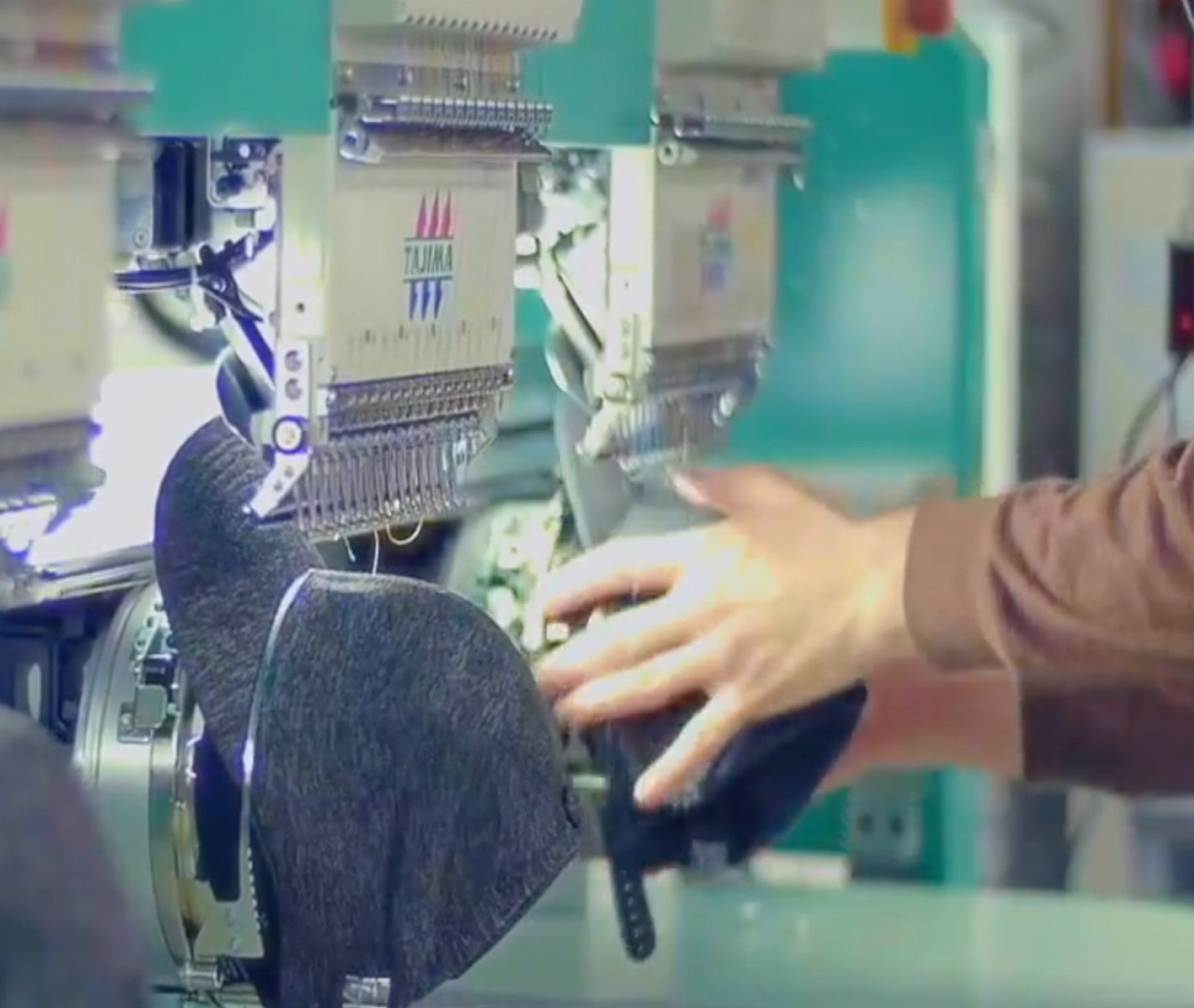
Embroidery can provide a professional, hard-wearing option for many work shirts, polos, jackets and selected workwear garments.
Printing and specialist heat transfers can also be suitable, depending on the material, artwork and placement.
At Fully Promoted Pyrmont, we consider the garment fabric, logo design and working conditions before recommending a decoration method.
For example, a large logo placed across an area experiencing frequent abrasion may deteriorate faster than branding positioned in a more protected location.
The aim is to maintain both garment performance and a professional business appearance.
Before approving a large workwear order, request samples of suitable options and examine how they are made.
Pay particular attention to:
Fabric thickness and construction
Stitching around high-stress areas
Knee reinforcement
Pocket durability
Movement when bending and squatting
Comfort when sitting or driving
Fit across the team
Washing instructions
Availability for future reorders
Where practical, having employees test garments during normal work activities can provide valuable feedback.
A garment that feels comfortable in a showroom should also perform during a full working day.
At Fully Promoted Pyrmont, we believe choosing workwear should begin with understanding the work itself.
We help clients assess how their employees move, what surfaces they work against, the level of durability required and the environment in which the garments will be worn.
Through our supplier network, including established workwear brands such as Bisley, Syzmik and JB's Wear, we can help businesses compare suitable garments across different fabric constructions, fits and price points.
We also assist with embroidery, printing, logo placement, garment sizing and reorder planning.
Rather than choosing a garment solely because it looks good in a catalogue, we help clients consider whether it is genuinely suited to their team's working conditions.
Because good workwear should do more than look professional on the first day.
It needs to keep performing after the hard work begins.
Whether you're outfitting a construction crew, maintenance team, landscaping business or mobile trade workforce, Fully Promoted Pyrmont can help you choose workwear designed for the job.
Explore our Workwear & Trades range or Trade Workwear Uniforms.
You can also contact Fully Promoted Pyrmont to discuss fabric options, reinforced work pants, durable work shirts, branded uniforms and suitable decoration methods.
We'll help you find practical, comfortable workwear that represents your business and stands up to the demands of the job.

Fully Promoted Sydney CBD South
Shop 2, 209 Harris Street
Pyrmont New South Wales 2009
Create exactly the look you want with a variety of branding options. Our experts can help you discover which techniques will best represent your brand and your budget.
Whether it’s embroidery for your garments, screen printing for a run of apparel, or the latest in branding technology with direct to transfer printing, Fully Promoted has you covered.
Contact Fully Promoted today.












Join our winning team and own your future with
Fully Promoted - the largest promotional franchise
in Australia.
Apply Today!
>



 Industries