Choosing the right garment is only half the job.
How your logo is applied can make just as much difference to the finished uniform.
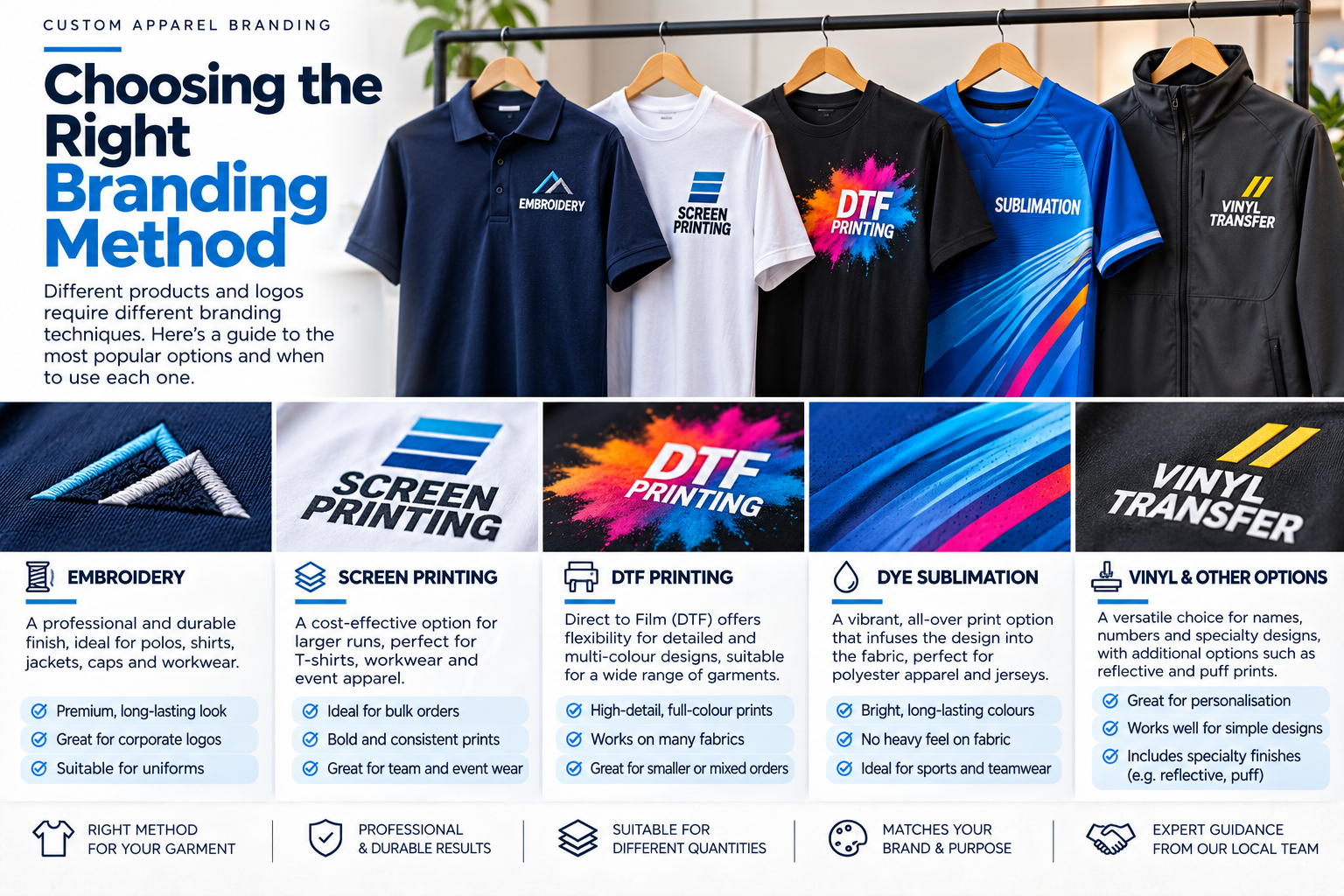
A beautifully embroidered logo can give a corporate polo a premium appearance. A detailed full-colour print may be more suitable for an event t-shirt, while sublimation can produce striking, lightweight sports jerseys.
The challenge is knowing which method works best.
For businesses ordering uniforms and branded apparel across Pyrmont, Sydney CBD, Ultimo, Darling Harbour, the Inner West and greater Sydney, understanding the differences between embroidery, screen printing, DTF and other decoration techniques can help avoid expensive mistakes.
At Fully Promoted Pyrmont, we help businesses select the appropriate branding method based on their artwork, garment, quantity and intended use.
Different fabrics and designs respond differently to embroidery and printing.
A small logo on a heavyweight polo may look excellent embroidered, while the same logo on a lightweight stretch t-shirt may be better suited to a printed transfer.
Before choosing a decoration method, consider:
Garment fabric and construction
Logo size and complexity
Number of colours
Print or embroidery placement
Quantity being ordered
Expected washing and wear
Budget
Desired appearance and finish
The objective is not simply to reproduce a logo. It is to make sure the decoration complements the garment and remains suitable for its intended use.
Embroidery remains one of the most popular branding methods for business uniforms.
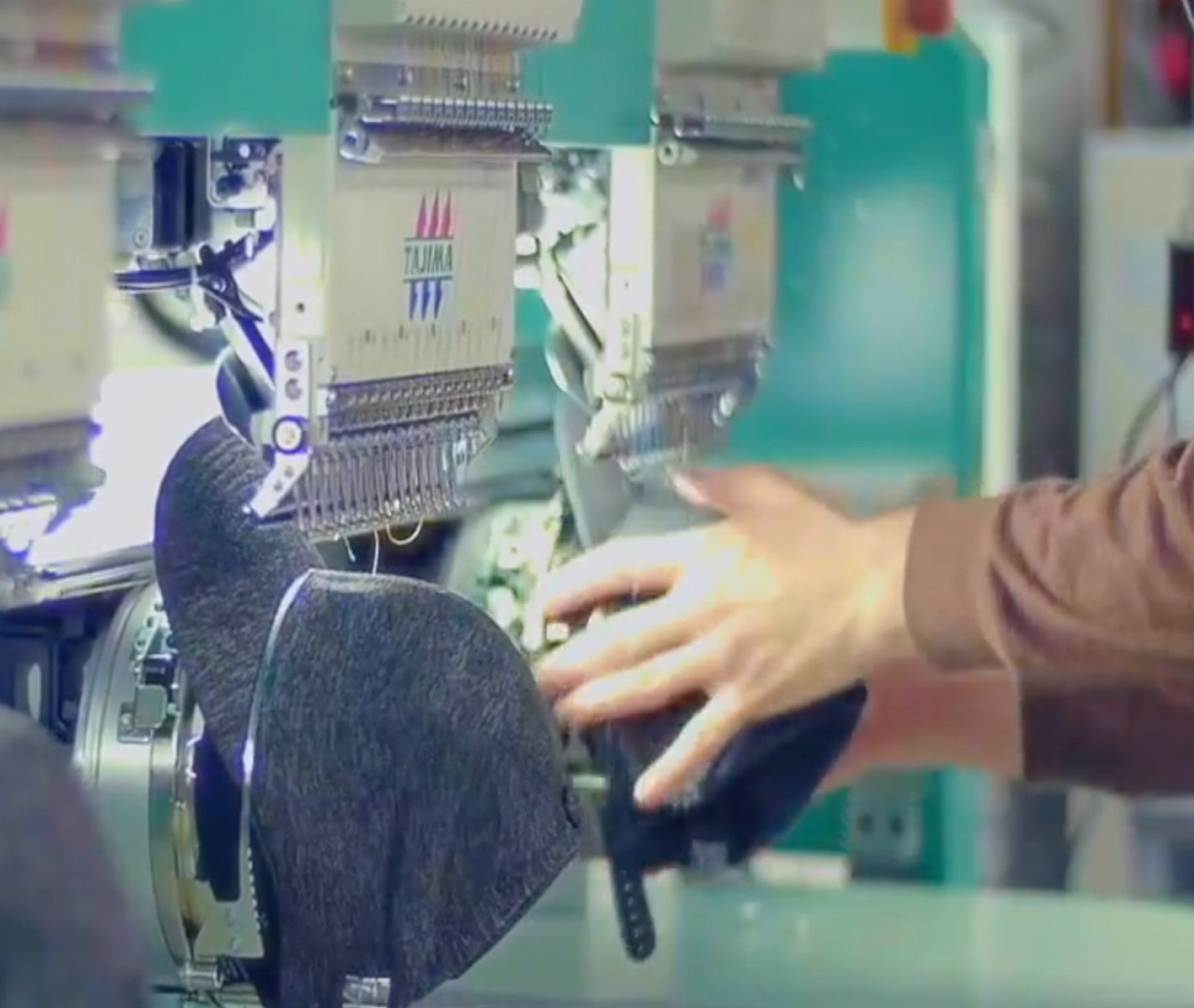
It uses specialised machines to stitch a logo directly onto the garment using coloured threads.
The result is a textured finish that can create a professional and premium appearance.
Embroidery is particularly suitable for:
Corporate polo shirts
Business shirts
Jackets and outerwear
Caps and beanies
Hospitality uniforms
Healthcare scrubs
Trade workwear
A clean left chest logo is often an excellent choice for staff uniforms.
Embroidery is also commonly used for employee names, department identification and smaller secondary logos.
Before embroidery can begin, the artwork must be digitised into a stitch file.
This process determines how the machine will reproduce the design, including stitch direction, density and sequencing.
Very fine lettering, small details and complex gradients may require adjustments.
The fabric also matters.
Lightweight or stretchy garments can require additional stabilisation, while dense embroidery may not suit every material.
Choose embroidery when: You want a professional, textured finish for logos on suitable uniforms, caps, jackets or business shirts.
Screen printing is a traditional garment decoration method that remains highly effective.
It uses prepared mesh screens to transfer ink onto fabric.
For conventional spot-colour screen printing, separate screens are typically prepared for each colour in the artwork.
Screen printing can be particularly effective for:
Event t-shirts
Promotional apparel
Staff t-shirts
Hoodies
Tote bags
Large uniform orders
Bold logos and artwork
It is often economical for larger quantities because the initial screen preparation costs are spread across more garments.
Once production is set up, the same design can be reproduced consistently across an order.
Screen printing works particularly well with bold designs and defined colours.
However, designs with numerous colours can increase setup requirements and cost.
For smaller quantities or artwork containing complex gradients and photographic detail, another printing method may be more practical.
Choose screen printing when: You need a larger quantity of garments with bold, consistent designs and want an economical printing solution at scale.
Direct to Film printing, commonly known as DTF, has become an important option for custom apparel.
The design is digitally printed onto a specialised film, combined with an adhesive system and transferred to the garment using heat and pressure.
This process allows detailed artwork and multiple colours without the same screen setup requirements as conventional screen printing.
DTF can be useful for:
Full-colour logos
Detailed illustrations
Event merchandise
T-shirts and hoodies
Smaller apparel runs
Staff uniforms
Complex multicolour designs
Selected bags and accessories
DTF can also be useful when the artwork includes gradients or fine details that would be difficult to reproduce through embroidery.
One major advantage is its flexibility.
A business may have a colourful logo containing several shades, small details and fine lettering.
Traditional embroidery may require simplification, while conventional screen printing could involve multiple screens.
DTF can often reproduce the artwork with fewer colour-related setup restrictions.
However, DTF is still a surface-applied transfer. Large designs can affect how a garment feels, and durability depends on transfer quality, fabric compatibility, application and washing conditions.
Choose DTF when: Your artwork is detailed, contains multiple colours or needs to be applied to a smaller or mixed garment order.
Heat transfer vinyl remains useful for specific types of garment personalisation.
Designs are cut from coloured vinyl and applied to compatible fabrics using heat and pressure.
Vinyl transfers can work well for:
Player names
Sports numbers
Individual staff names
Simple one-colour artwork
Small personalisation orders
For example, a sports club may have matching uniforms but need different names and numbers on each garment.
Vinyl can provide a practical solution for this type of customisation.
Vinyl is generally better suited to simpler shapes and designs.
Large vinyl areas can feel heavier than some other decoration methods, while very fine artwork may be difficult to cut and weed.
Application temperature, pressure and garment compatibility are also important.
Choose vinyl when: You need names, numbers or relatively simple personalisation on compatible apparel.
Dye sublimation is particularly popular for polyester sportswear.
The process uses heat to transfer special dyes into compatible polyester fibres or coated surfaces.
Unlike surface-applied prints, the colour becomes part of the material.
Sublimation is particularly suitable for:
Cricket jerseys
Soccer kits
Rugby league jerseys
AFL guernseys
Netball uniforms
Basketball uniforms
Running and athletics apparel
Fully customised teamwear
It allows teams to incorporate full-colour artwork, gradients, sponsor logos, player names and numbers into the garment design.
Because the decoration does not form a thick surface layer, the garment retains its lightweight feel.
Sublimation works best on suitable polyester fabrics and is not a direct replacement for printing on everyday cotton garments.
For fully customised sports kits, however, it can provide an excellent combination of design flexibility, comfort and durability.
Choose sublimation when: You need full-colour polyester sportswear, all-over designs or customised team jerseys.
Printing technology continues to develop.
Beyond standard DTF and vinyl, businesses can also explore specialist heat transfers and decorative finishes.
Depending on the artwork and garment, options may include:
Screen-printed transfers
Hybrid digital and screen-printed transfers
Puff print effects
Reflective transfers
Specialty finishes for compatible fabrics
Puff printing creates a raised, three-dimensional effect that adds texture to selected designs.
It can work particularly well for bold lettering, streetwear-style merchandise and premium casual apparel.
Some modern transfers are designed for demanding garments, including polyester sportswear and technical fabrics.
Selected systems incorporate features intended to improve wash performance or reduce dye migration.
These can be useful where conventional transfers are not the most suitable option.
The best choice depends on the garment and the required finish rather than simply selecting the newest technology.
Durability is one of the most common questions businesses ask.
There is no single method that will always outlast every other option.
Performance depends on the garment, application quality, laundering and working environment.
Branding method | Main advantage | Important consideration |
|---|---|---|
Embroidery | Strong, textured decoration | Fabric suitability and stitch density |
Screen printing | Durable, crisp prints for larger runs | Ink system and curing quality |
DTF printing | Detailed, full-colour artwork | Transfer quality and application |
Vinyl transfer | Simple custom names and numbers | Film quality and wash care |
Dye sublimation | Colour integrated into polyester | Requires suitable fabrics |
Specialist transfers | Technical or decorative finishes | Product-specific requirements |
For long-term staff uniforms, embroidery can be an excellent option.
For large printed designs, properly produced screen printing can offer strong durability.
For polyester sportswear, sublimation is particularly effective because the design becomes part of the fabric.
DTF and specialist transfers can also perform well when correctly matched and applied.
The important consideration is choosing a suitable process and following the correct garment care instructions.
The most economical branding method depends on the order.
Embroidery pricing is influenced by factors such as stitch count, design complexity and quantity.
Screen printing costs depend on the number of colours, screens, print size and order quantity.
DTF pricing is often influenced by the size and area of the transfer, quantity and production requirements.
Vinyl costs vary depending on material, cutting complexity and personalisation.
Sublimation pricing depends on the garment construction, artwork and manufacturing method.
A method that is cost-effective for 20 garments may not be the most economical choice for 500 garments.
This is why we recommend reviewing the artwork and order requirements before selecting a process.
At Fully Promoted Pyrmont, we understand that professional branding requires both good products and the right production techniques.
Our role is not simply to apply your logo using whichever method is easiest.
We assess your artwork, garment fabric, logo placement, intended use and budget before recommending a suitable decoration method.
We can help with:
Embroidery and artwork digitising
Screen printing
DTF printing
Vinyl transfers
Sublimation
Specialist decoration techniques
Logo placement and sizing
PMS colour considerations
Artwork preparation
Garment selection
Sample and artwork approvals
Consistency across repeat orders
For example, a business may choose embroidered polos for its sales team, DTF-printed event shirts, sublimated sports jerseys and embroidered caps.
Each product uses a different decoration method, but the overall branding remains consistent.
That is where technical knowledge, product selection and attention to detail make a difference.
The best branding method is the one that suits your logo, your garment and the way the finished product will be used.
Whether you're ordering professional uniforms, event t-shirts, sports jerseys, workwear or branded merchandise, Fully Promoted Pyrmont can help you choose the right method.
Explore our Branding and Customisation Services, learn more about Screen Printing, or contact Fully Promoted Pyrmont.
We'll help you choose the right garment, branding technique and finish so your business looks professional and your branding is made to last.

Fully Promoted Sydney CBD South
Shop 2, 209 Harris Street
Pyrmont New South Wales 2009
Create exactly the look you want with a variety of branding options. Our experts can help you discover which techniques will best represent your brand and your budget.
Whether it’s embroidery for your garments, screen printing for a run of apparel, or the latest in branding technology with direct to transfer printing, Fully Promoted has you covered.
Contact Fully Promoted today.





Join our winning team and own your future with
Fully Promoted - the largest promotional franchise
in Australia.
Apply Today!
>



 Industries