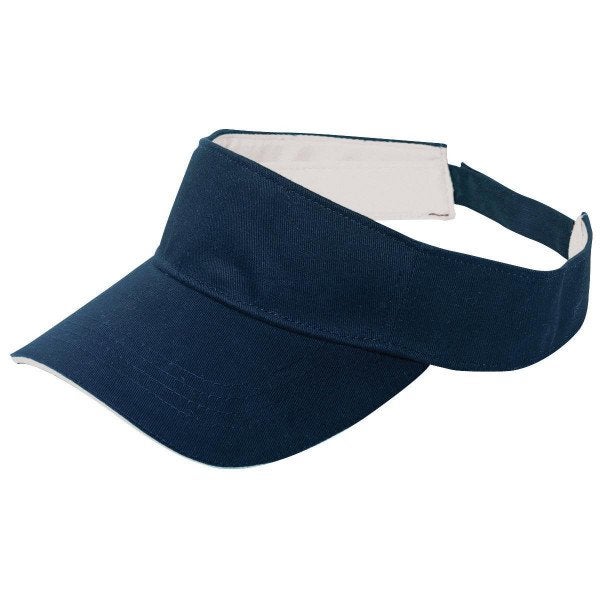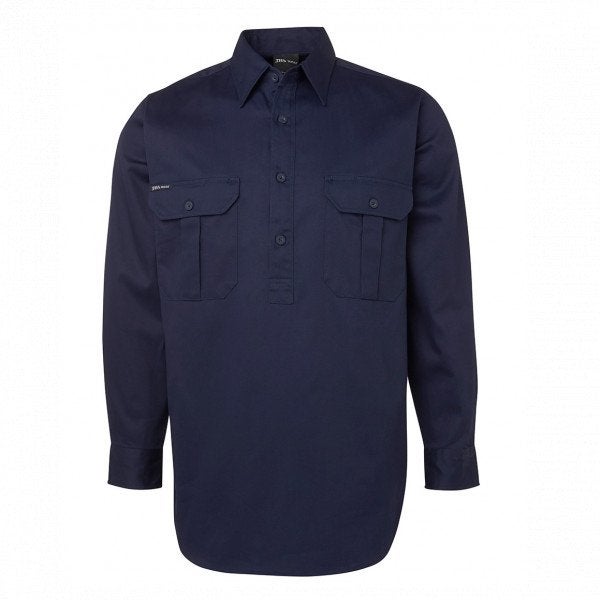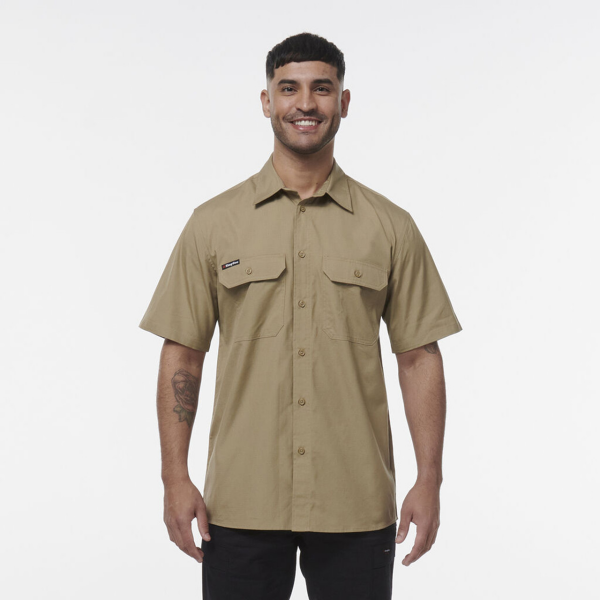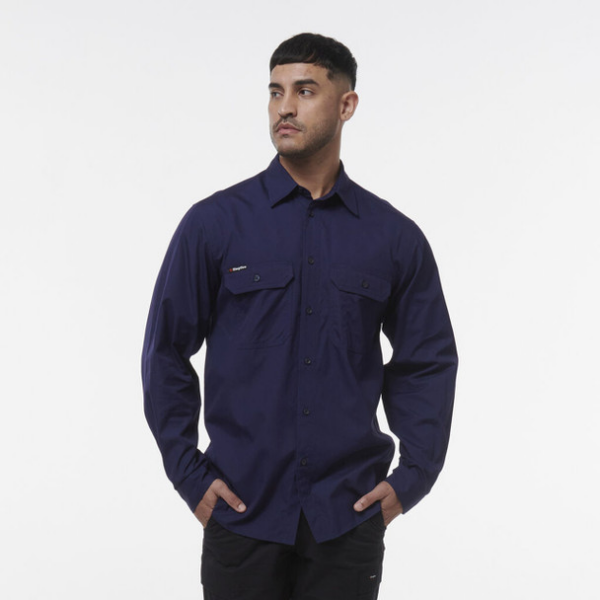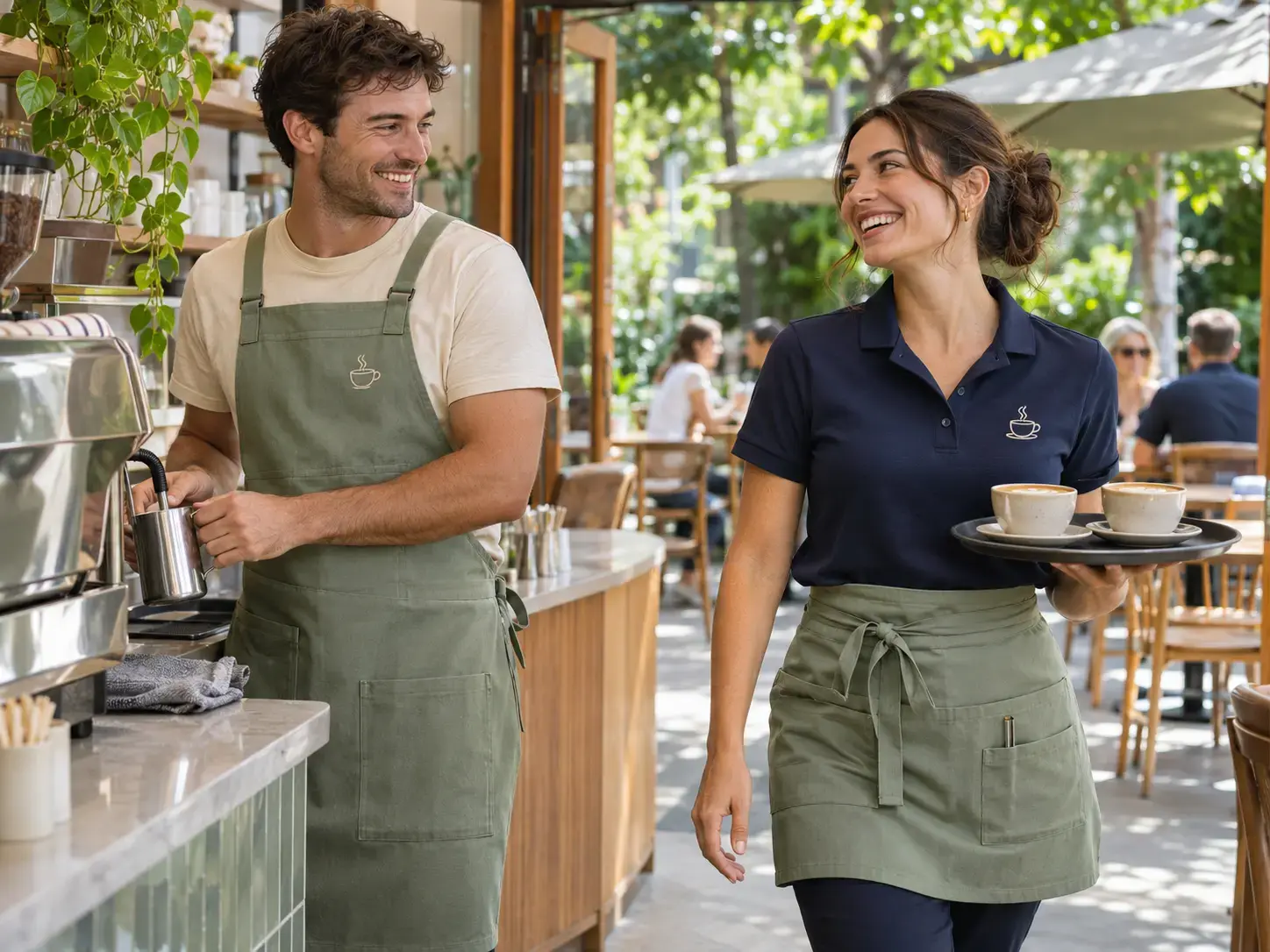
Choosing café uniforms in Carina starts with two everyday needs: staff should feel comfortable through service, and customers should know whom to approach. Lightweight, breathable garments, well-fitted aprons and visible branding are a useful starting point.
When selecting branded apparel for a Carina café, assess the whole outfit together. A comfortable shirt can feel restrictive beneath a heavy apron, while a carefully embroidered logo may disappear behind its bib.
The right combination should work at the coffee machine, across the dining area and through the afternoon clean-down.
A practical café uniform combines comfortable fabric, unrestricted movement, clear identification and manageable washing requirements.
Before choosing colours or placing an order, check these essentials:
What matters | What to look for | What to test |
|---|---|---|
Comfort | Suitable fabric weight and airflow | Wear the shirt with the apron during normal tasks |
Movement | Room through the shoulders, waist and hips | Reach, bend, carry and sit |
Recognition | Consistent colours and visible branding | View the outfit from the customer’s side of the counter |
Practicality | Useful pockets and adjustable straps | Load pockets with the items staff actually carry |
Care | Instructions compatible with your laundry routine | Wash a sample as directed and inspect it again |
Continuity | Available sizes and identifiable garment codes | Ask how replacements and new-starter orders work |
Use this checklist to compare samples rather than relying on catalogue photographs.
Keep the team visually coordinated while allowing different garments for different jobs.
Someone making coffee behind the counter may need different apron coverage from a team member carrying plates to outdoor tables. A supervisor may prefer a polo, while the café’s casual style may suit T-shirts elsewhere.
Café role | Outfit worth considering | Main check before ordering |
|---|---|---|
Barista | Lightweight T-shirt or polo with an adjustable bib apron | Strap comfort, reaching and access to pockets |
Table-service staff | Branded polo or relaxed shirt with a waist apron | Movement and visible branding |
Counter and takeaway team | Branded T-shirt or polo, with an apron where needed | Recognition from the queue and collection point |
Shift supervisor | Coordinated polo or shirt with a readable name badge | Clear identification without unnecessary layers |
Kitchen and food-preparation team | Task-appropriate kitchen clothing | Suitability for the work, washing and workplace requirements |
Coordinating colour and branding across roles can create a consistent appearance without making everyone wear the same outfit.
There is no single fabric that will feel coolest in every café. Fabric weight, construction, fit and the layers worn over it all affect comfort.
These comparisons provide a starting point:
Fabric option | Why consider it? | What to check |
|---|---|---|
Cotton-rich fabric | Often chosen for a soft feel and breathability | Drying time, creasing and comfort after active work |
Polyester-cotton blend | Can balance everyday durability and easier care | The actual fabric weight and feel against the skin |
Performance fabric | May offer moisture-management or quick-drying properties | Manufacturer specifications, appearance and branding compatibility |
Stretch blend | Can make reaching and bending easier | Fit, recovery and whether it keeps its shape after washing |
These are general tendencies, not guarantees for every garment. Compare the actual products before deciding.
Ask your supplier for the fabric composition and weight in GSM, meaning grams per square metre. Use weight to compare similar garments, but do not treat the lowest number as automatically the best choice.
A very light shirt still needs to provide suitable coverage and withstand regular use. Try it under normal café lighting, with the intended apron.
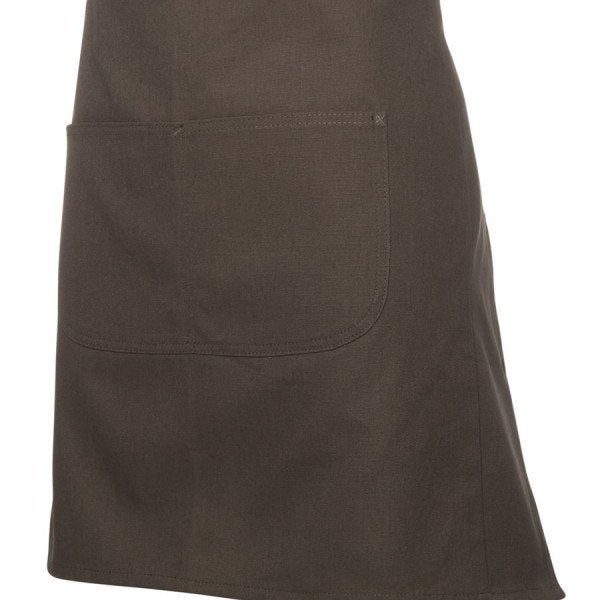
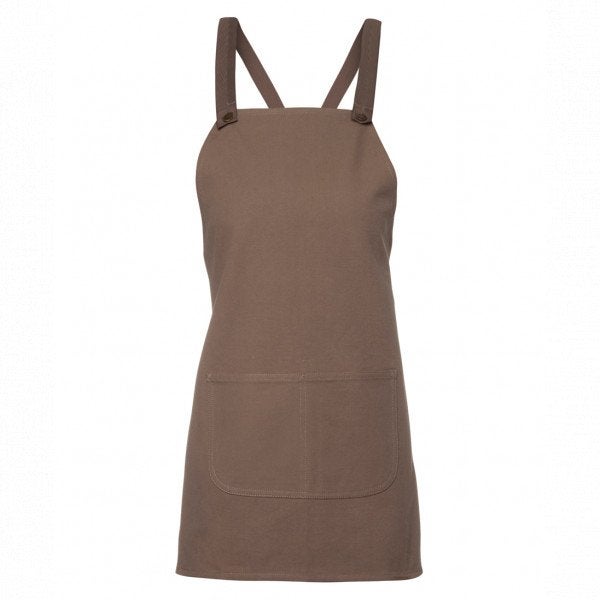
Choose a bib apron when upper-body coverage is useful. Consider a waist apron when the role needs less coverage and the shirt carries the branding.
Apron style | Useful features | Potential drawback |
|---|---|---|
Bib apron | Covers more of the shirt and provides a visible branding area | Adds another layer across the torso |
Waist apron | Leaves the upper body uncovered and keeps shirt branding visible | Provides less coverage against spills |
Cross-back bib apron | Offers an alternative to a neck-strap design | Still requires careful adjustment and a fit trial |
For a warmer-shift trial, compare apron weight, length and strap adjustment. Load the pockets with a notepad or ordering device, then ask staff to move through their usual tasks.
Avoid choosing a heavy apron purely for its appearance. Australian hospitality suppliers offer lightweight apron options specifically for active service environments, demonstrating why it is worth comparing construction as well as style.
Recognition comes from a consistent visual identity and clear branding, not from making the uniform more elaborate.
Start with:
One main shirt colour or a small coordinated palette.
A consistent apron style or colour.
A logo that contrasts with the garment.
A readable name badge where appropriate.
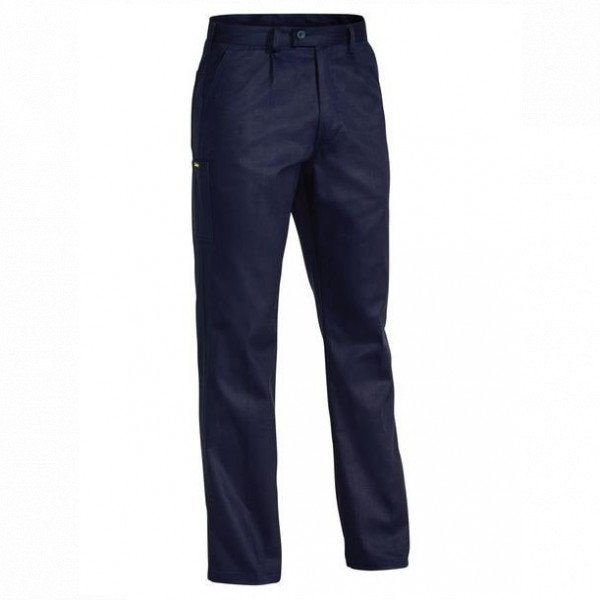
Agreed trousers and footwear that suit the work.
For example, a suggested combination is a navy polo with a lighter waist apron and a small contrasting chest logo. Another is a neutral T-shirt beneath a branded bib apron.
The key is visibility. With a bib apron, place the main identifier on the apron rather than relying on a covered shirt logo. With a waist apron, the shirt’s chest area remains available.
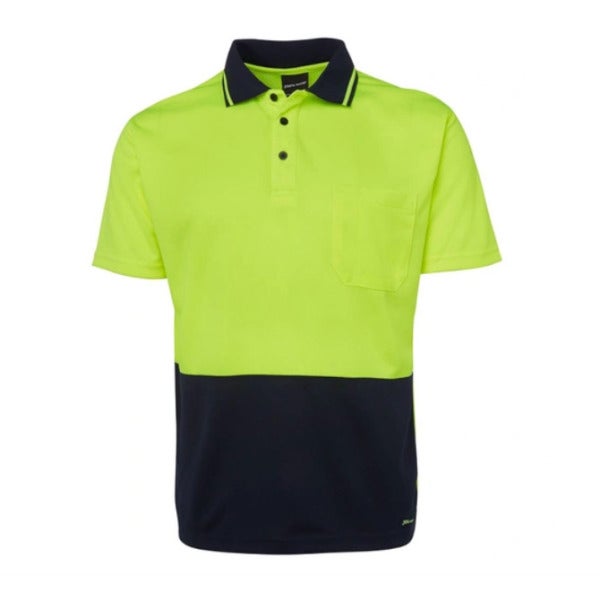
Custom-branded workwear polos can provide a coordinated base, but assess the finished outfit from where customers actually stand.
Ask someone unfamiliar with the uniform to look from the entrance, queue and collection point:
Can they identify a staff member?
Can they see the café branding?
Does the apron or ordering device hide it?
Is the name badge readable without leaning closer?
If you also sell café merchandise, give working staff a clear distinction, such as a coordinated apron or badge. Staff clothing and customer merchandise serve different purposes.
Select the branding method after checking the garment, design and visible logo position.
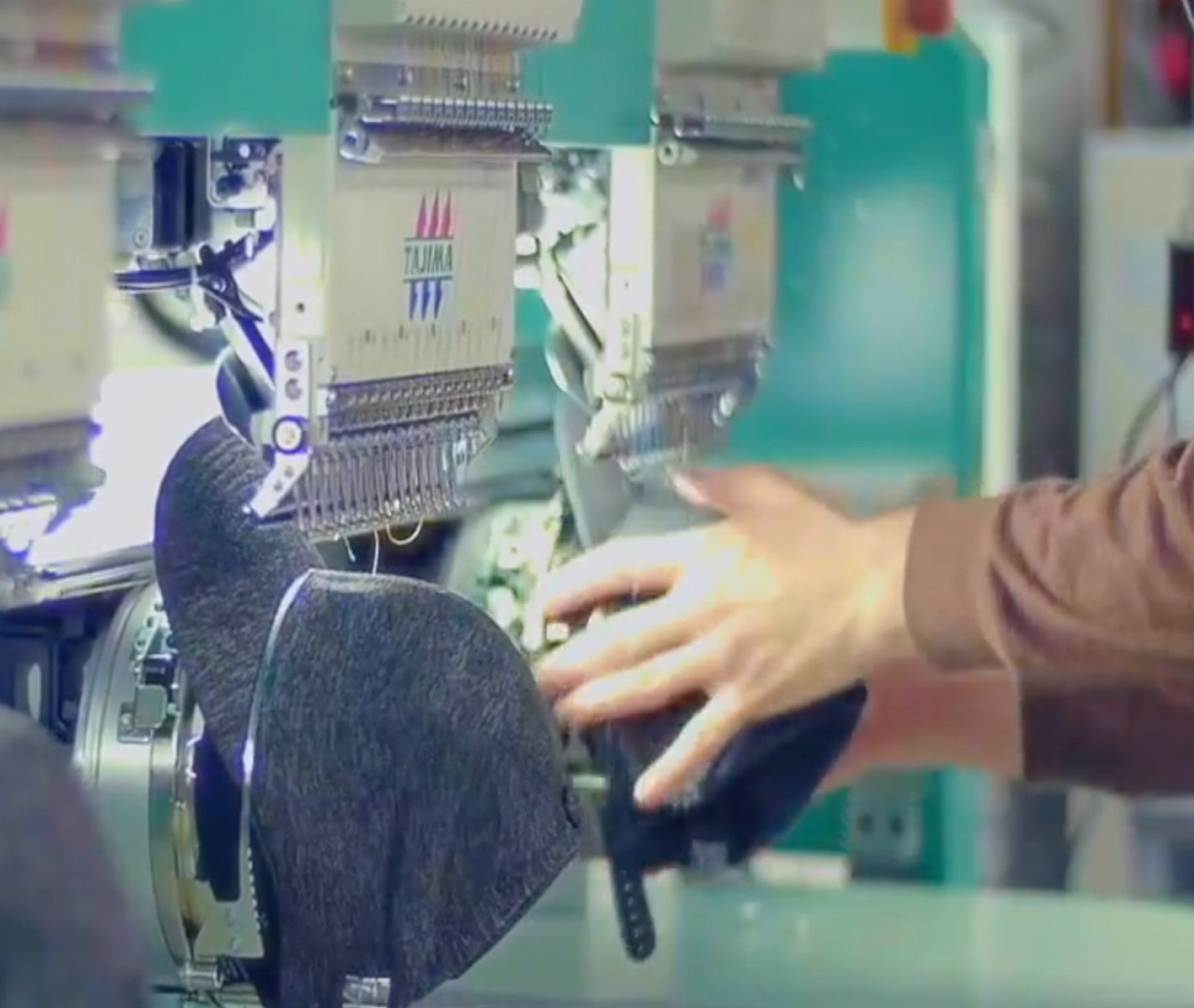
A compact embroidered logo may suit a polo or apron. Printing may suit a T-shirt design or larger artwork. The important question is how the decoration behaves on the selected fabric.
Ask the supplier to show comparable finished work and check:
Whether small lettering remains readable.
Whether stitching pulls or puckers the fabric.
How the printed area feels when worn.
Whether the design is visible with the apron on.
Whether the garment and decoration share compatible care instructions.
Fine details and textured fabrics can change how artwork reproduces, so a digital proof should not be your only quality check.
A small wear-and-wash trial can expose problems that a quick fitting misses.
Where practical, purchase or arrange samples for staff in different roles and sizes. Ask each person to record:
Trial question | What their answer helps you assess |
|---|---|
Where did the outfit feel warm or restrictive? | Fabric, fit and layering |
Did you adjust the apron repeatedly? | Strap design and sizing |
Could you reach and bend comfortably? | Movement |
Were the pockets useful when loaded? | Practicality |
Was the branding visible throughout service? | Customer recognition |
What changed after washing? | Fit, colour, decoration and care suitability |
Use specific feedback such as “the neck strap pulls when the pocket is loaded” rather than simply “the apron is uncomfortable”.
Include different fit preferences in the trial. A coordinated uniform does not require every employee to wear the same cut.
The number of uniforms needed depends on shifts, laundry turnaround and the likelihood of needing a change.
As a planning example, someone working three shifts before their uniforms can be washed and dried may need three clean tops plus an additional spare. This is an example, not a fixed allocation for every café.
Aprons may need their own replacement allowance. Keep clean spares accessible and separate from used garments.
Maintain a simple order record containing:
Garment brand, style code and colour.
Staff sizes and chosen fits.
Approved logo file and finished dimensions.
Decoration method and placement.
Supplier details and previous order reference.
If the same business is also ordering custom uniforms for a Cannon Hill team, use that shared record to maintain consistency across locations.
Lighter clothing does not replace appropriate heat-management measures.
Consider the café environment alongside the uniform: heat from equipment, airflow, outdoor exposure and physically demanding tasks all matter. WorkSafe Queensland identifies ventilation, shade, access to drinking water and suitable rest arrangements among the measures used to manage workplace heat.
Ask staff where conditions feel most uncomfortable and address those areas. Changing a shirt will have limited benefit if the work area itself remains poorly ventilated.
Before approving the order, get clear answers about samples, sizing, decoration, minimum quantities and the date finished garments will arrive.
When comparing uniform printing suppliers, provide the same garment quantities and branding requirements so you can compare complete quotes.
Confirm:
The garment codes and size breakdown.
Every logo position and artwork setup charge.
Sample costs, delivery and GST.
Written artwork approval before production.
Availability of smaller replacement orders.
The process for reporting incorrect or faulty items.
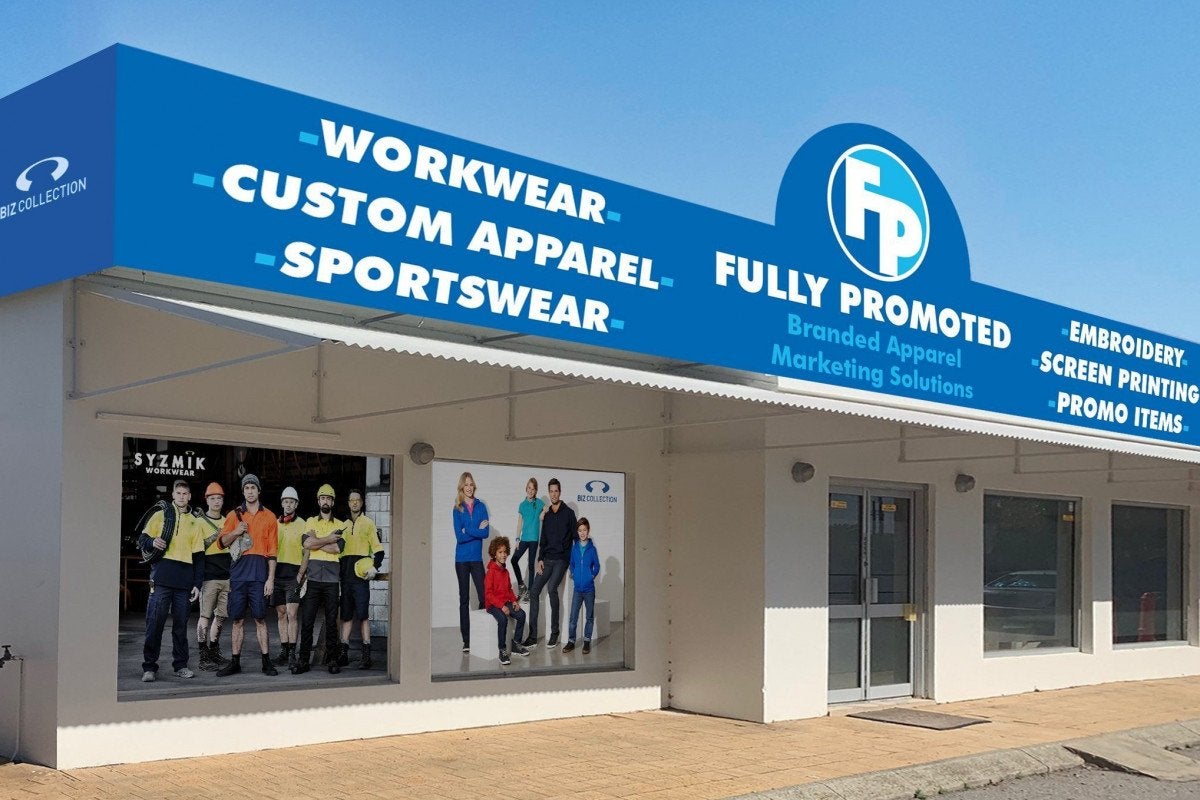
Minimum quantities depend on the garments and branding method you choose. At our Tingalpa showroom, you can compare available samples, check fabric feel and try sizes before ordering. Contact our team beforehand if you want to inspect a particular style, so we can confirm sample availability and the minimum quantity for your order.
Either can work. T-shirts often suit a relaxed café identity, while polos offer a collared option. Compare the actual fabric, fit and complete outfit rather than choosing by garment type alone.
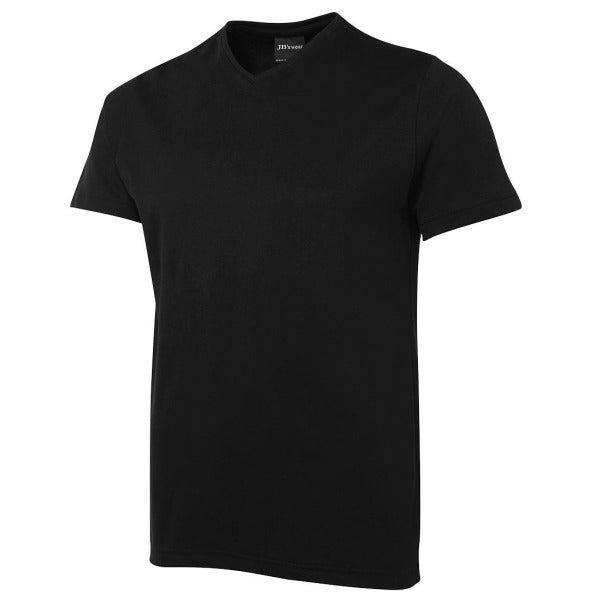
Black can remain part of the uniform, but colour alone does not determine comfort. Assess fabric weight, airflow, fit, apron coverage and whether staff work outdoors. Trial the outfit in the conditions where it will be worn.
Yes. If existing garments are suitable and presentable, coordinated branded aprons or readable badges may provide a useful refresh. Check the complete outfit before purchasing additional items.
Place it where customers can see it during normal service. A bib apron can carry the main logo; a waist apron leaves a shirt’s chest logo visible. Confirm placement while wearing the full outfit.
Comfortable, recognisable café uniforms begin with the daily work: making coffee, carrying orders, greeting customers and cleaning down. Choose the garment and apron together, test the fit and visibility, then confirm the care and reorder details.
For your Carina café, a useful next step is to take your current uniform and logo to Fully Promoted Tingalpa and compare suitable samples. A focused trial will help you decide what needs changing before committing to a full team order.
Create exactly the look you want with a variety of branding options. Our experts can help you discover which techniques will best represent your brand and your budget.
Whether it’s embroidery for your garments, screen printing for a run of apparel, or the latest in branding technology with direct to transfer printing, Fully Promoted has you covered.
Contact Fully Promoted today.




















Join our winning team and own your future with
Fully Promoted - the largest promotional franchise
in Australia.
Apply Today!
>



 Industries