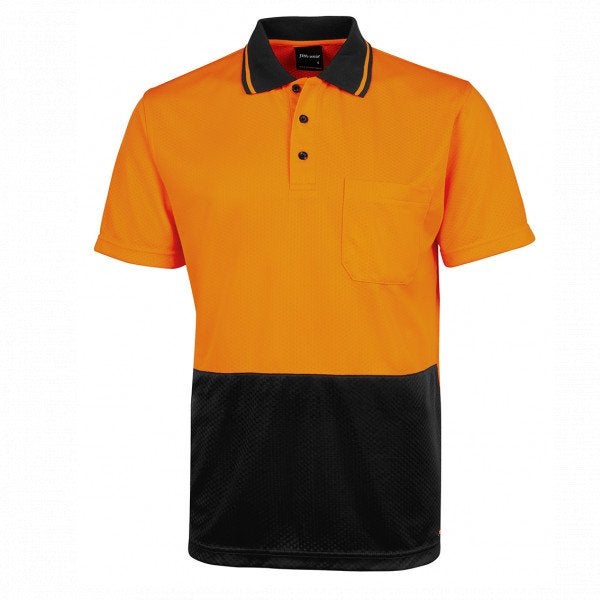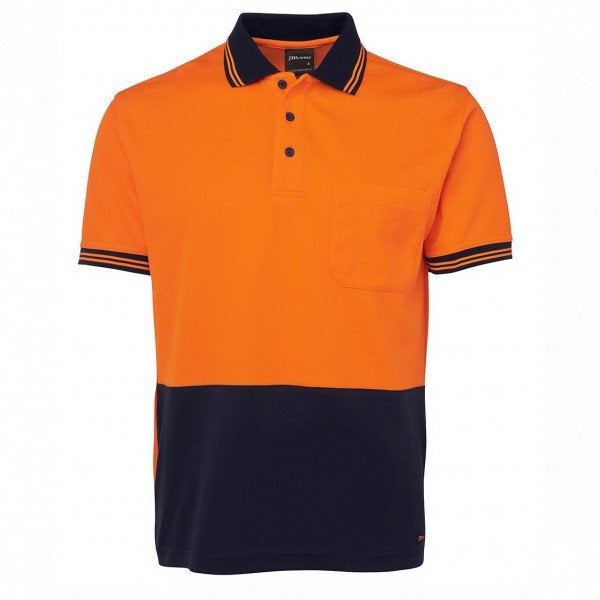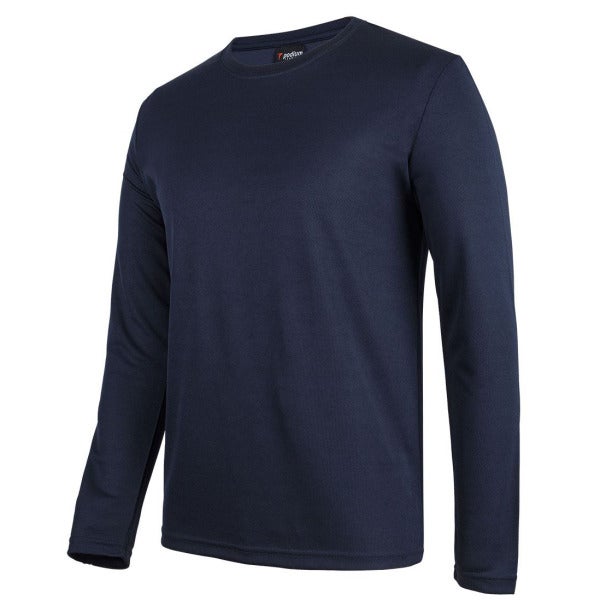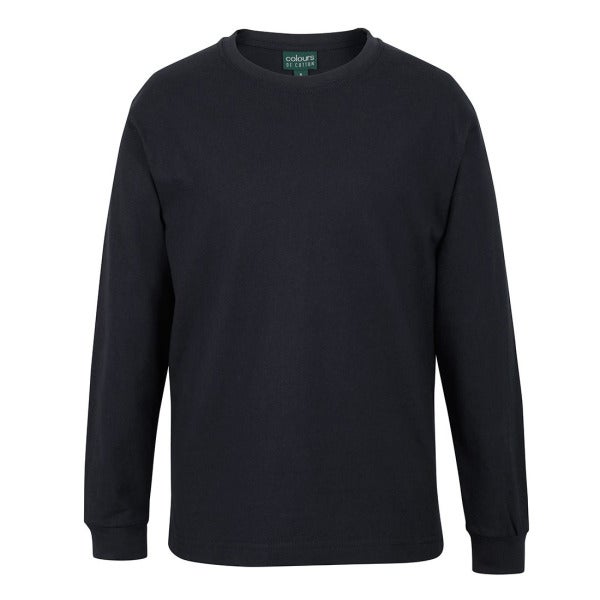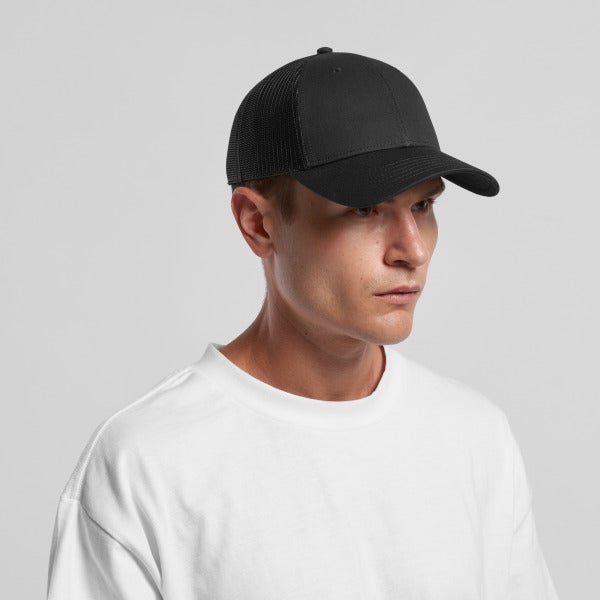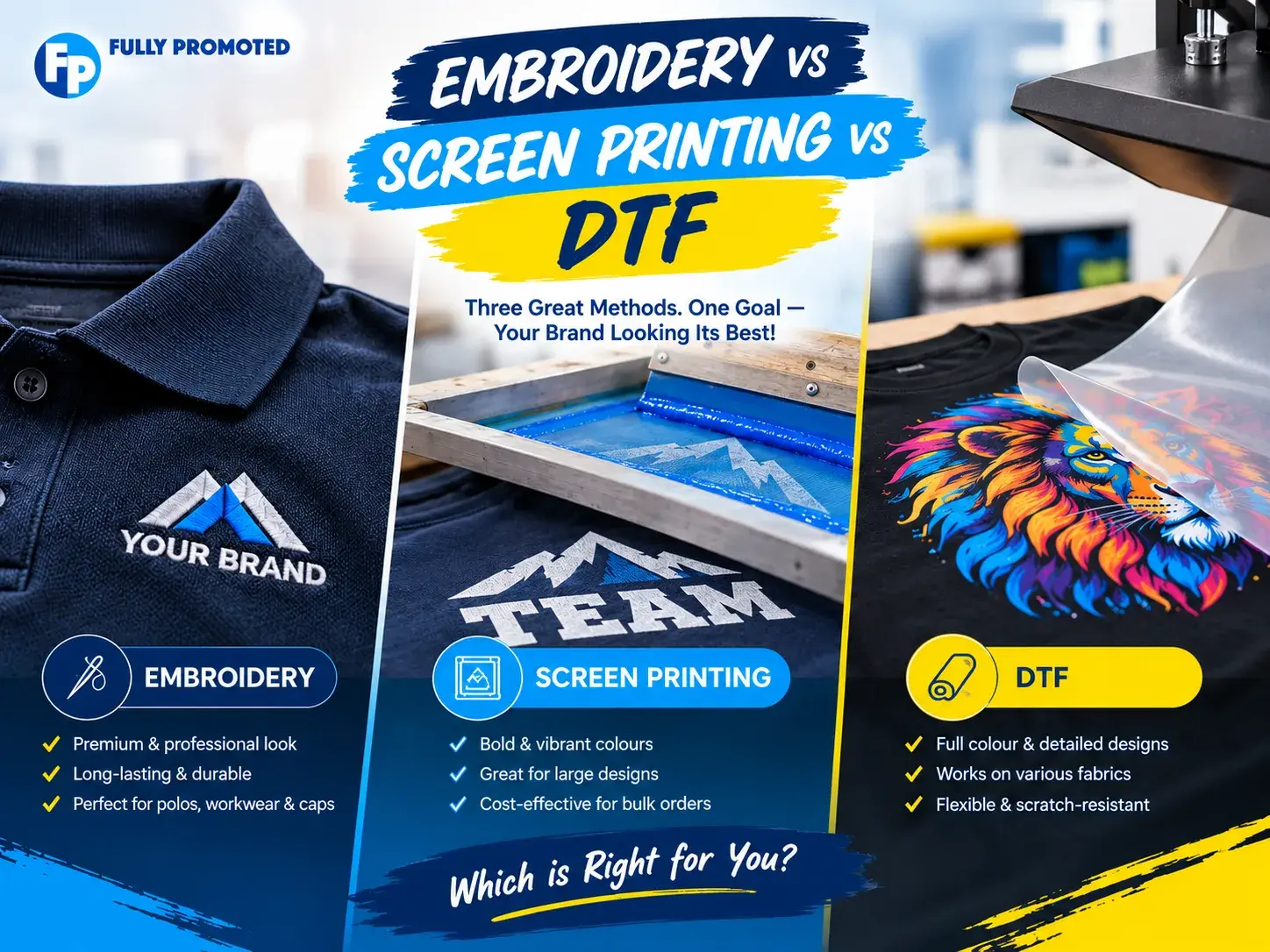
Embroidery suits smaller logos on polos, business shirts and jackets. Screen printing often offers better value for larger batches of the same simple design. DTF printing is useful for detailed, full-colour artwork and smaller orders. The best choice depends on your garment, logo, quantity, budget and washing requirements.
You do not have to choose one method for your entire team. An embroidered polo might suit reception staff, while a printed work shirt gives a delivery crew more space for visible branding. The goal is a coordinated uniform that looks right and works comfortably throughout the day.
Use this comparison to shortlist a method before having your supplier assess the actual garment and artwork.
Factor | Embroidery | Screen Printing | DTF Printing |
|---|---|---|---|
How it works | Stitches a digitised design into fabric using thread | Applies ink through prepared mesh screens | Transfers a digitally printed design from film onto fabric using heat and adhesive |
Best starting point | Small logos and names on suitable uniforms | Larger batches repeating the same design | Detailed, full-colour artwork and smaller batches |
Appearance | Raised, textured stitching | Printed finish that varies with the ink and application | A transfer layer on the fabric surface |
Common garments | Polos, business shirts, work shirts, caps and selected jackets | T-shirts, promotional clothing and suitable workwear | Compatible T-shirts, polos, hoodies and other apparel |
Fine detail and gradients | May need simplifying for clear stitching | Possible with specialist techniques, but setup becomes more involved | Often practical for multicolour designs and gradients |
Large designs | Dense stitching can add weight and cost | Often suitable for prominent front or back graphics | Possible, but broad solid areas can feel heavier |
Small orders | Can be suitable; setup affects the unit cost | Setup may make small batches less economical | Often practical because separate colour screens are unnecessary |
Larger orders | Worth comparing for compact logos | Often economical for repeated designs with fewer colours | Can suit larger orders, but compare pricing against screen printing |
Main cost factors | Digitising, stitch count, quantity and positions | Screen setup, colours, positions and quantity | Transfer size, quantity, preparation and application |
Durability depends on | Thread, stitching, garment and care | Ink, curing, garment and care | Transfer system, application, garment and care |
Main limitation | Very fine artwork and large, dense designs | Setup costs and less flexibility for changing designs | Fabric compatibility, heat sensitivity and print coverage |
These are selection principles, not fixed minimum orders or guaranteed performance ratings. Your supplier’s capabilities and the specific garment can change the recommendation.
Choose embroidery when you want a stitched finish for a relatively small logo on a garment that can support it. It is commonly used for branded polos, business shirts, work shirts, caps and jackets.
Before stitching begins, the artwork is digitised into instructions for an embroidery machine. The design’s stitch count, density and dimensions influence its appearance and cost.
Embroidery is worth considering for:
A clear business logo on the chest of a polo or shirt.
Coordinated branding across suitable uniforms and outerwear.
Staff names or short role descriptions.
Caps and other compatible headwear.
A textured finish for everyday customer-facing clothing.
A compact logo can look smart without dominating the garment. However, small should not mean difficult to read. Lettering needs enough space to remain clear when stitched.
A logo that looks sharp on a website may need adjustment before it works in thread. Tiny lettering, fine outlines and colour gradients can lose definition at chest-logo size.
Large, dense designs can also add weight or cause lightweight fabric to pucker. Ask whether the artwork needs simplifying, resizing or moving to another position.
Ask your supplier: “Will this logo stitch clearly at the proposed size on our chosen garment?”
Choose screen printing when you need a larger batch of garments carrying the same design, particularly with a limited number of colours.
Screen printing applies ink through prepared screens. For conventional spot-colour printing, each colour generally requires its own screen, with additional setup for separate print positions.
Once that preparation is complete, repeating the design across a larger order becomes more efficient.
Consider screen printing for:
Matching event or promotional T-shirts.
Bold business names and simple graphics.
Prominent front or back designs.
Larger orders using consistent artwork.
Clothing where you want a printed finish rather than raised stitching.
For example, a batch of staff T-shirts with the same two-colour back design is worth quoting for screen printing.
Setup costs can make a small batch less economical. Extra colours and print positions can also increase the total.
Screen printing can reproduce gradients and complex images through specialist techniques. However, the preparation involved may make another method more practical for a smaller uniform order.
Ask your supplier: “At our quantity and number of colours, how does screen printing compare with DTF?”
Choose DTF when your artwork includes detailed, full-colour designs or you need a smaller batch that does not justify screen-printing setup.
DTF stands for direct-to-film. The design is printed onto film and transferred to a compatible garment using heat and adhesive. It does not require a separate screen for each artwork colour.
DTF is worth considering for:
Multicolour logos and gradients.
Smaller batches of branded clothing.
Orders containing different artwork versions.
Designs that would lose important detail in embroidery.
Occasional top-up orders, subject to supplier minimums.
It can be useful when keeping the detail in your original logo matters more than achieving a stitched finish.
DTF leaves a transfer layer on the fabric. A small chest logo and a broad, solid back design can feel quite different when worn.
The garment also needs to tolerate the application process. Coloured polyester can experience dye migration, where colour from the fabric discolours the applied design. Testing the intended garment and transfer combination helps identify this risk.
Ask your supplier: “Have you checked this transfer system on the exact garment we want?”
The cheapest method depends on the complete order. A compact embroidered logo, a large screen-printed design and a full-colour DTF transfer involve different production work.
Use these examples as starting points for a quote:
Example Order | Method to Compare First | Why |
|---|---|---|
20 polos with a compact, simple chest logo | Embroidery | The artwork suits a stitched uniform finish |
100 T-shirts with the same two-colour graphic | Screen printing | A larger run can spread screen setup costs |
8 shirts with a detailed multicolour logo | DTF | Avoids separate screen setup for each colour |
Work shirts with a chest logo and large back design | Embroidery plus printing | Each position can use a suitable method |
A few replacement uniforms for new starters | Match the existing finish where practical | Consistency and repeat-order costs both matter |
These examples illustrate buying decisions. They are not supplier minimums or pricing guarantees.
Ask for the cost of your initial order and a smaller repeat order. A business ordering a large batch today may need only a few replacements later.
When comparing uniform printing suppliers, provide the same garment specifications, artwork dimensions, quantities and logo positions. Confirm whether each quote includes setup, GST and delivery.
There is no reliable lifespan ranking that covers every garment, production process and washing routine.
Embroidery can provide durable branding on suitable fabric. Screen printing and DTF can also perform well when the decoration is compatible with the garment, correctly produced and properly cared for.
Explain how your uniforms will be used:
Will they be washed at home or commercially laundered?
Are particular wash temperatures required?
Will staff use tumble dryers?
Will straps, tools or equipment rub against the decoration?
Are cleaning chemicals part of the working environment?
A general claim such as “lasts 50 washes” is difficult to assess without knowing the test conditions. Ask whether the proposed garment and decoration suit your actual care requirements.
For a larger rollout, consider trialling a decorated sample through normal wear and washing before approving the full order.
Decoration size and coverage can matter as much as the method itself. A breathable shirt may feel different once a large area is covered with stitching or print.
Dense embroidery adds local weight and backing. A broad DTF transfer creates a layer over the decorated area. Screen-print feel varies with the ink system, coverage and application.
For active staff, consider whether a smaller logo or a design with open spaces would provide enough visibility with less coverage.
When choosing summer work uniforms for hot weather, assess the finished garment as well as the undecorated fabric. Check how it feels when bending, reaching and moving.
Yes. A coordinated uniform range can use different decoration methods across garments. A suitable garment may also carry more than one method.
For example, a business might choose:
Embroidered business shirts for reception staff.
Embroidered chest logos and printed backs for a field team.
DTF logos for a small batch of promotional clothing.
Screen-printed T-shirts for a larger event.
For businesses planning custom uniforms in Port of Brisbane, office, warehouse and delivery staff may need different garments. Shared colours and consistent logo treatment can connect the team without forcing everyone into the same clothing.
Agree on the approved logo version, dimensions, placement and colour references. Thread and ink reflect light differently, so review physical samples where close colour consistency is important.
Fabric composition is only part of the decision. Weight, stretch, texture, coatings, seams and pockets can affect decoration.
For protective or hi-vis clothing, have the supplier assess the proposed branding against the garment’s intended function and manufacturer guidance.
Check spelling, small lettering, spacing and important logo details. An enlarged digital proof can make a design appear more readable than it will be on clothing.
Confirm whether embroidery requires an approved simplified version of your logo.
A logo may be hidden by an apron, jacket, bag strap or equipment. Placement can also look different across garment styles and sizes.
Where possible, try on a sample before approving an unusual position.
An artwork proof helps confirm layout and dimensions. A decorated sample also allows you to assess texture, fabric behaviour and application quality.
Ask which approval stages are included and whether a physical sample carries an additional charge.
Get the care instructions and production schedule before committing. Ask how smaller top-up orders will be handled and whether artwork changes create new setup charges.
Keep the approved artwork, garment references and order number for future enquiries.
No. DTF prints a design onto film before transferring it to clothing. DTG, or direct-to-garment printing, applies ink directly to the garment.
The names are similar, but the processes and fabric considerations differ.
No. A compact embroidered logo can be competitively priced, while a large, densely stitched design may cost considerably more.
Compare the same garments, quantities and logo positions. The method name alone does not determine the final price.
All three can be used on suitable polyester garments, but compatibility needs to be checked individually.
Heat-applied decoration requires attention to fabric sensitivity and dye migration. Embroidery needs suitable support and stitching for the fabric’s weight and stretch.
Start with the required garment and its visibility requirements, then assess the proposed branding size and position.
No decoration method automatically makes a uniform suitable for every worksite. Ask the supplier to check the complete decorated garment against the relevant requirements.
Personalisation is possible, but the suitable method and price depend on the garment and design.
Embroidery and individual transfers can be options. Screen printing is generally less convenient when each item needs different text. Confirm spelling and placement before approval.
Timing depends on garment stock, artwork preparation, approvals, order quantity and production capacity.
DTF may require less setup for a small, detailed order, but it does not guarantee the earliest completion date. Provide your required delivery date when requesting the quote.
Choose the garment around the work, then select the decoration around your artwork, quantities and budget. That approach helps you avoid paying for a finish that looks good in a preview but feels wrong during the working day.
Fully Promoted Tingalpa offers embroidery, screen printing and DTF alongside other branding options. Explore the branded apparel range, then share your logo, preferred garments, quantities and required date with the team.
Request a uniform quote and compare the options for your actual order.
Create exactly the look you want with a variety of branding options. Our experts can help you discover which techniques will best represent your brand and your budget.
Whether it’s embroidery for your garments, screen printing for a run of apparel, or the latest in branding technology with direct to transfer printing, Fully Promoted has you covered.
Contact Fully Promoted today.
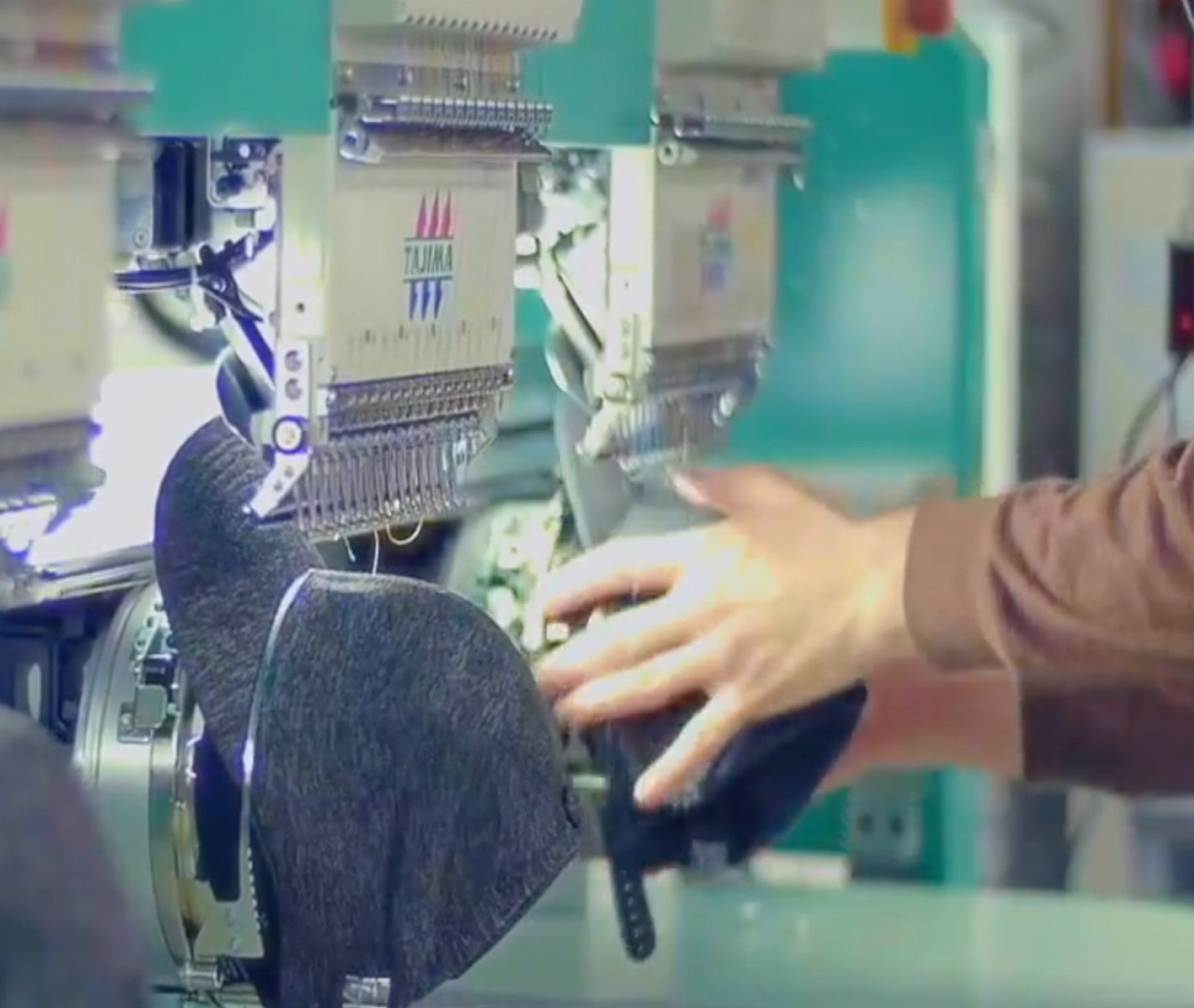









Join our winning team and own your future with
Fully Promoted - the largest promotional franchise
in Australia.
Apply Today!
>



 Industries