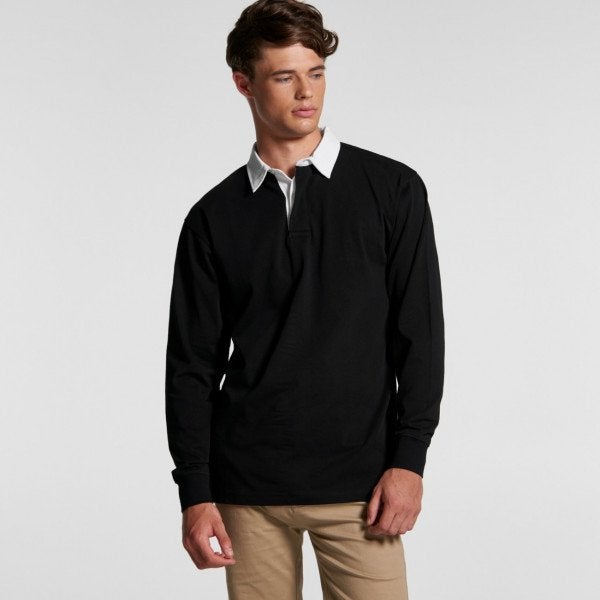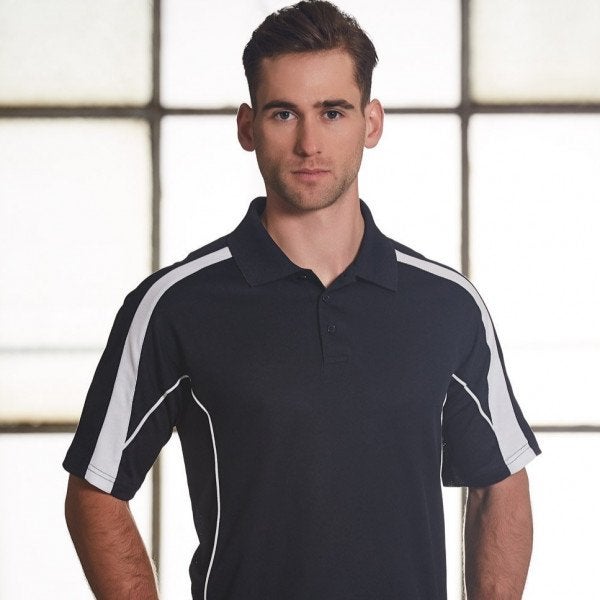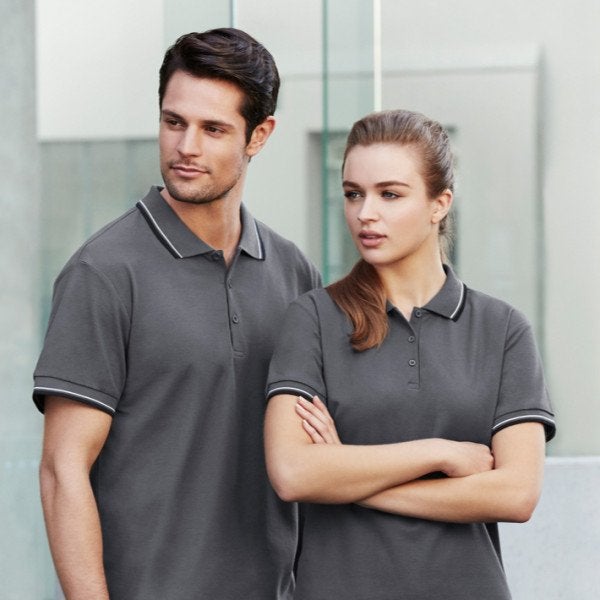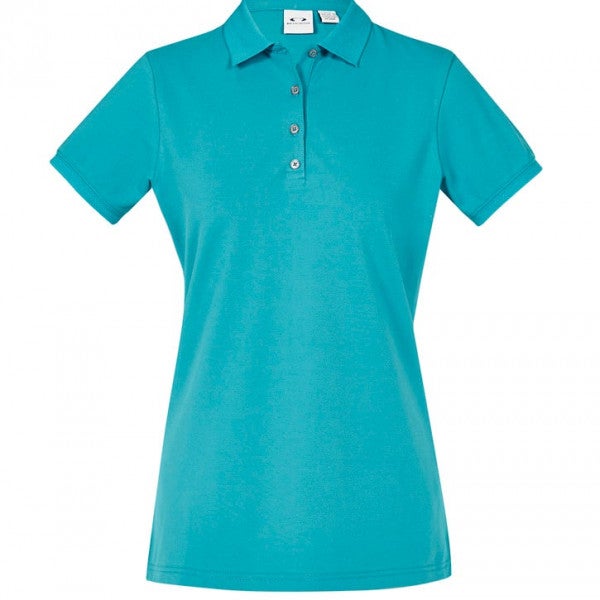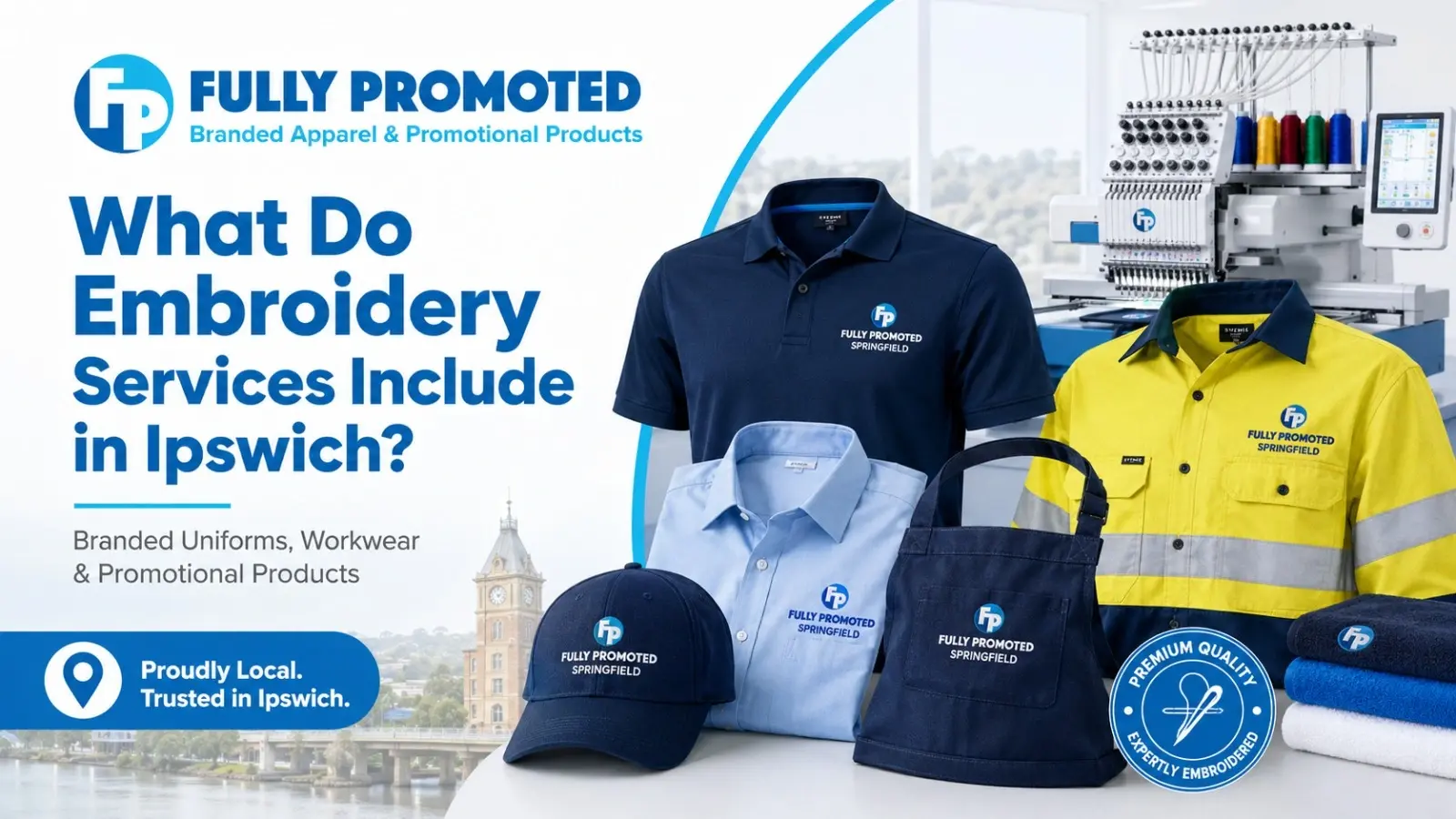
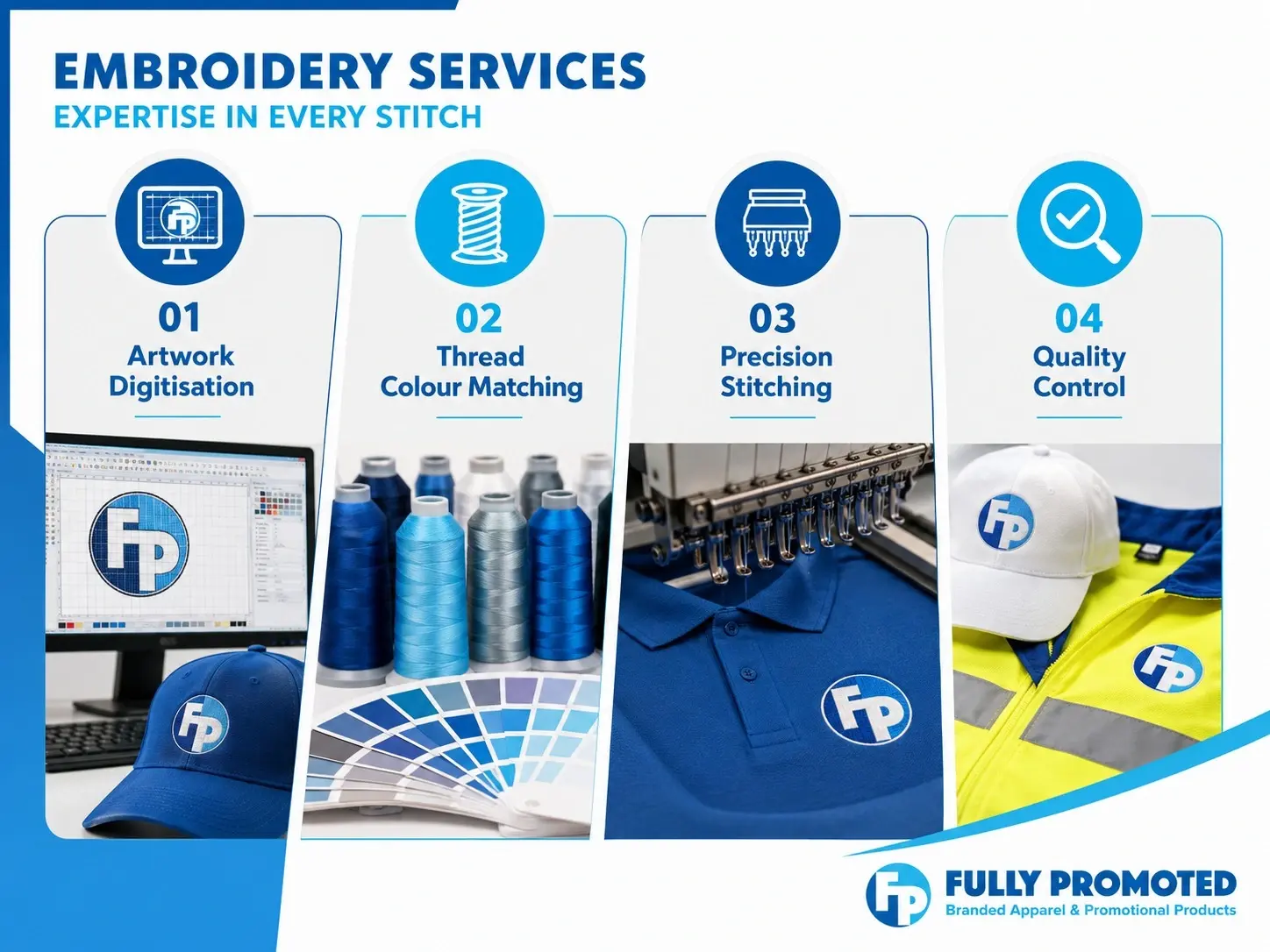
Embroidery services in Ipswich typically include garment selection and sourcing, logo digitisation, thread colour matching, artwork proofing, machine stitching, finishing, and quality control. Professional suppliers also manage bulk uniform orders, individual employee personalisation, and ongoing reorders or delivery for businesses across the region.
Whether you operate a trade business in Bundamba, manage a medical clinic in Ipswich Central, run a hospitality venue, or organize a local sports club, your team’s uniform plays a major role in how customers perceive your brand. Custom embroidery is the gold-standard decoration method across South East Queensland for producing durable, elevated, and professional branded apparel.
If you are evaluating custom embroidery services in Ipswich, understanding what is included in the service—and how the process works from concept to delivery—will help you order with confidence.
A complete embroidery service handles much more than stitching a logo onto fabric. End-to-end embroidery solutions cover every stage of uniform creation to ensure your final garments look sharp, feel comfortable, and withstand daily wear.
A comprehensive professional embroidery package includes:
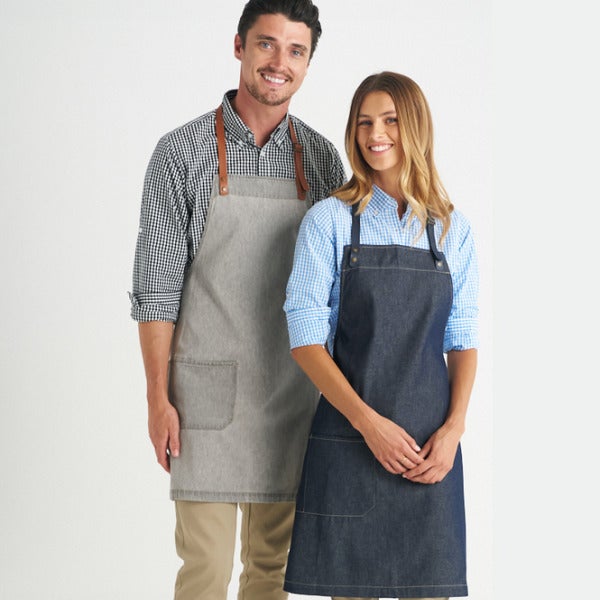
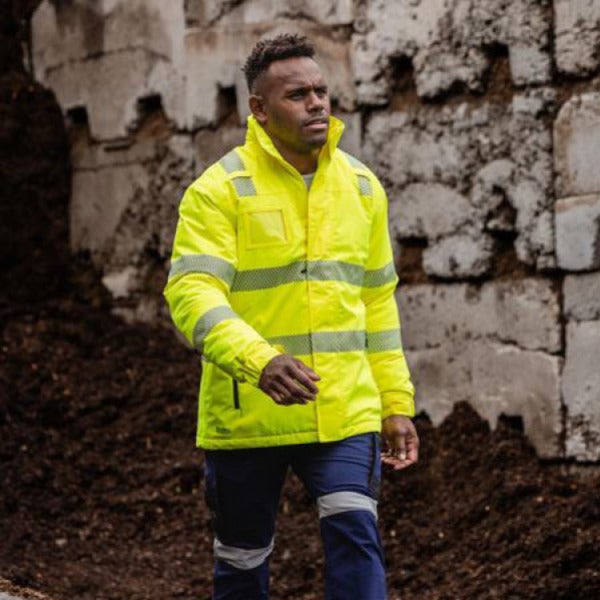
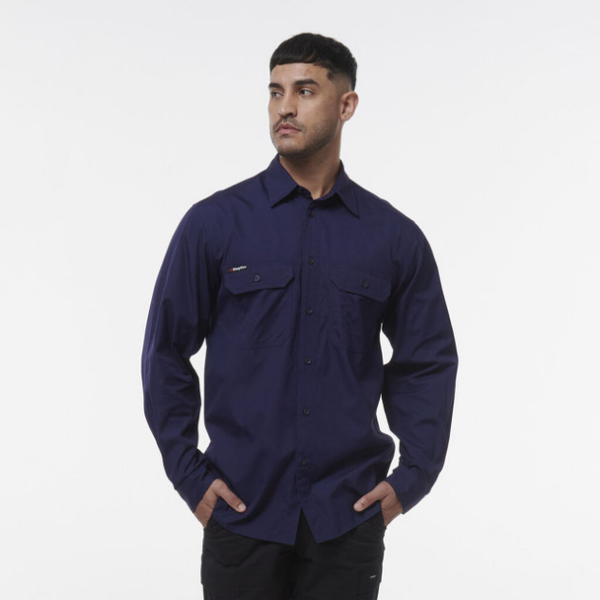
Garment Sourcing & Supply: Access to extensive trade catalogues covering polos, business shirts, hi-vis workwear, jackets, aprons, and caps. Alternatively, approved client-supplied garments can be decorated.
Artwork Assessment & File Checking: Evaluation of your logo to check stitch feasibility, text size, line clarity, and color distribution.
Logo Digitisation: Translating digital artwork files into machine-readable embroidery stitch files tailored to specific fabric types.
Thread Colour Matching: Precise matching of your logo shades using high-tensile, colorfast polyester or rayon threads.
Placement & Sizing Guidance: Recommendations on ideal stitch positions and sizes based on garment structure and industry standards.
Digital or Physical Proofing: Sample stitch-outs or detailed digital mockups for final approval before full production begins.
Computerised Machine Stitching: High-precision embroidery executed on multi-head, commercial machines.
Finishing & Quality Inspection: Manual thread trimming, backing removal, garment pressing, quality checks, and individual folding or packing.
Order Management & Fulfillment: Bulk order coordination, team sorting, local collection, or direct delivery across Ipswich and surrounding hubs.
Professional logo embroidery transforms a digital image into a physical, textured design using automated, high-speed machinery. To achieve clean, long-lasting results, your order moves through four distinct technical stages:
An embroidery machine cannot read a standard JPG, PNG, or vector PDF file directly. It requires a dedicated stitch file (such as .DST or .EMB) that dictates needle movement, stitch types (satin, fill, or running stitch), density, and direction. During digitisation, a technician manually maps your logo to ensure clean edges and prevent fabric puckering.
Once the digitised file is prepared, threads are assigned to match your brand guidelines. High-grade polyester thread is primarily used because it offers superior colorfastness, resists fading under Queensland’s harsh UV rays, and withstands commercial laundering.
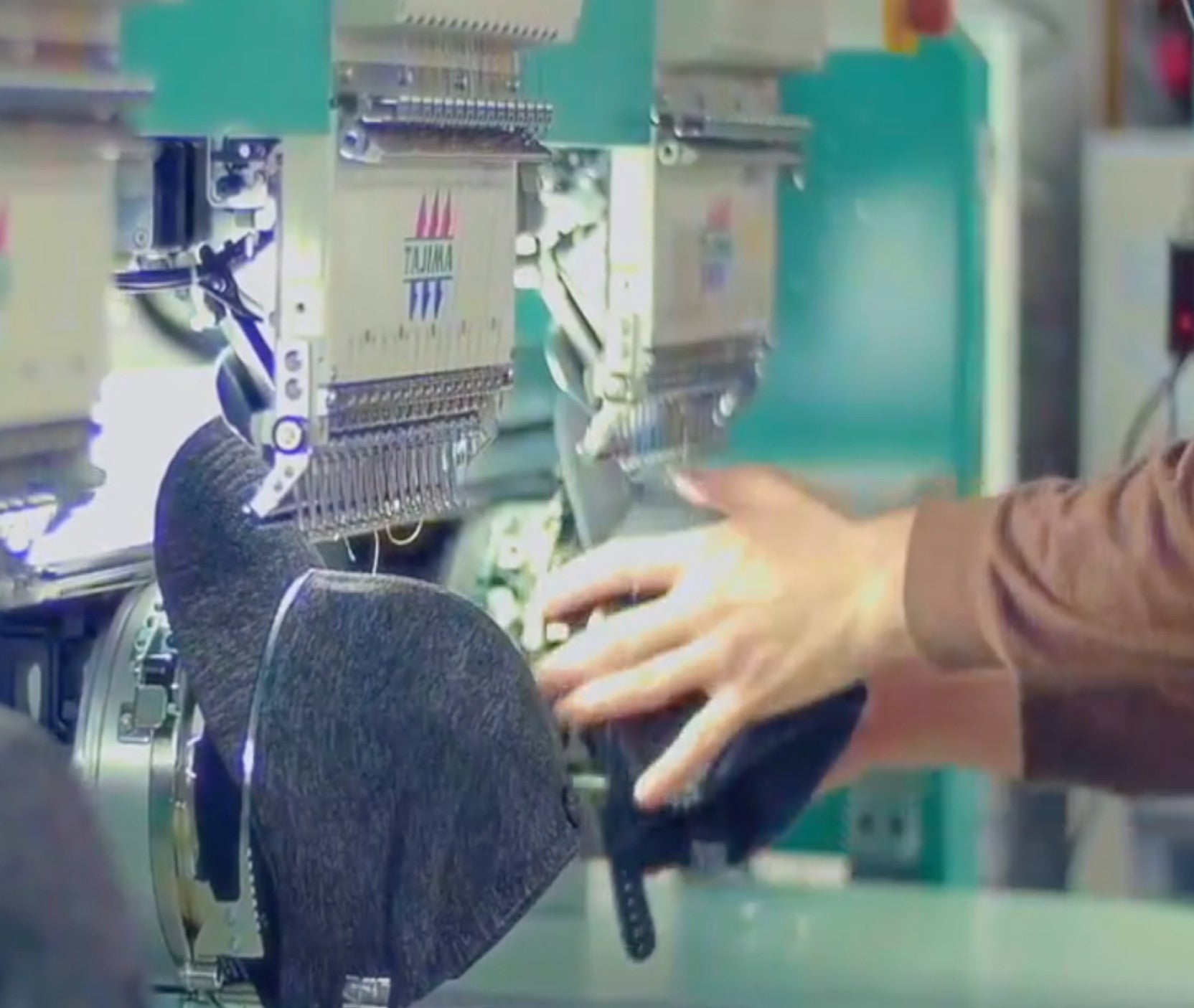
Garments are held taut in specialized embroidery hoops to ensure flat, stable stitching. The hooped garments are loaded onto multi-head industrial embroidery machines, which stitch the design with high-speed precision across all items in the run.
After stitching, every item undergoes manual finishing. Technicians trim excess backing materials, remove jump threads, inspect stitch density for defects, and steam-press the apparel so it arrives clean, crisp, and ready to wear.
Embroidery works exceptionally well across heavy, textured, fleece, and woven materials. A professional supplier can decorate a wide spectrum of apparel tailored to your industry:
Corporate Uniforms and Business Attire
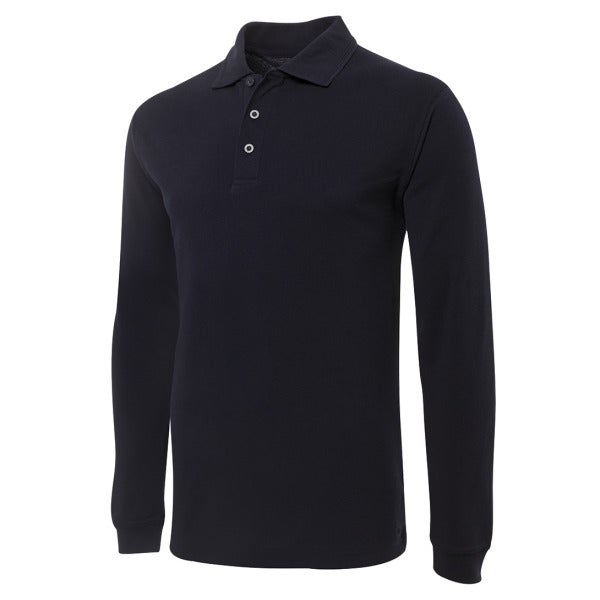
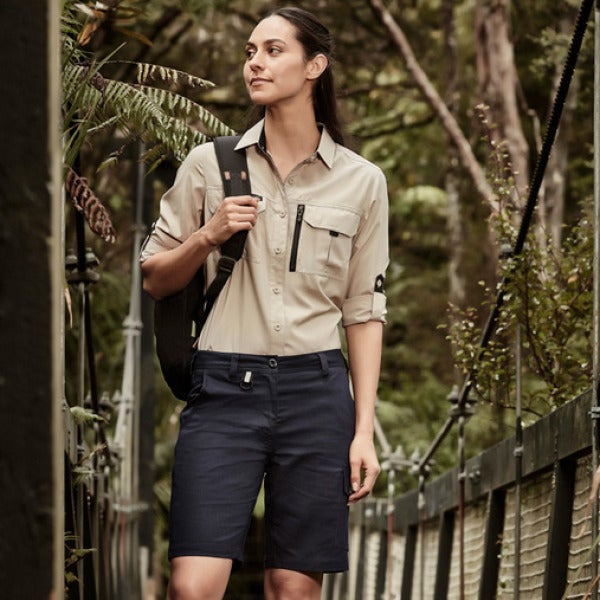
Business shirts and blouses: Suitable for subtle left-chest logo embroidery on cotton and poly-blend fabrics.
Suit jackets and blazers: Ideal for executive branding on lapels, chest pockets, or cuffs.
Knitwear and cardigans: Accepts clean logo stitching when supported with appropriate backing stabilization.
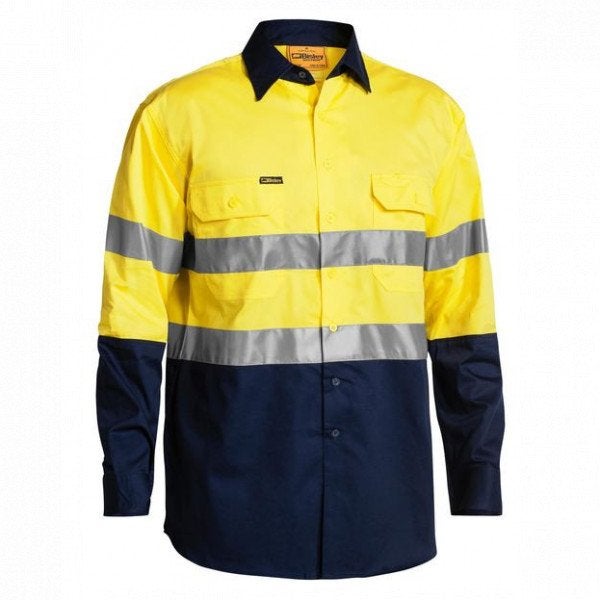
Cotton drill & tradie shirts: Durable fabrics that support dense, heavy-duty logo badges.
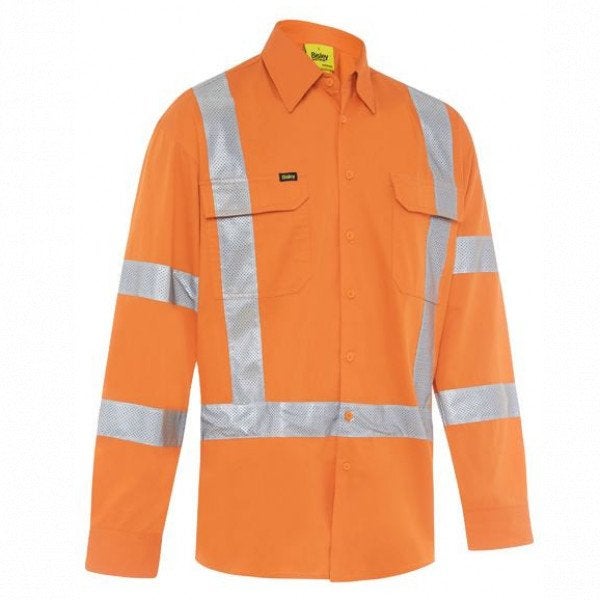
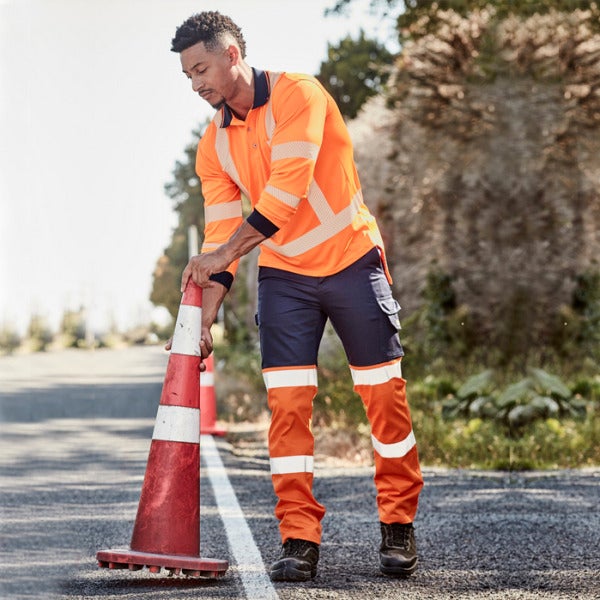
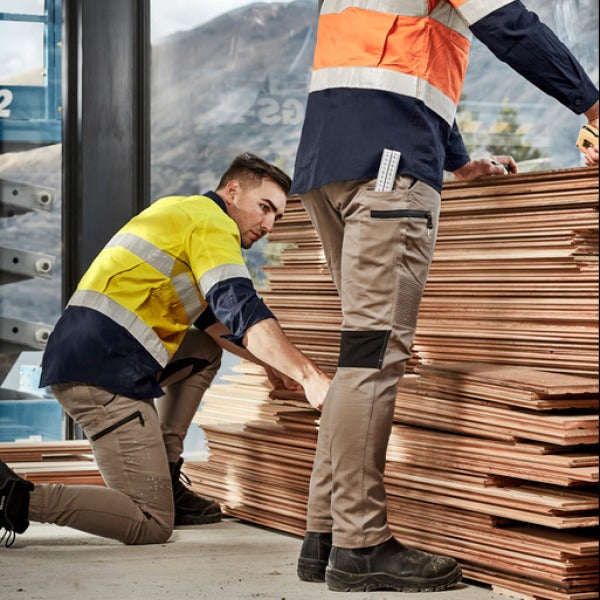
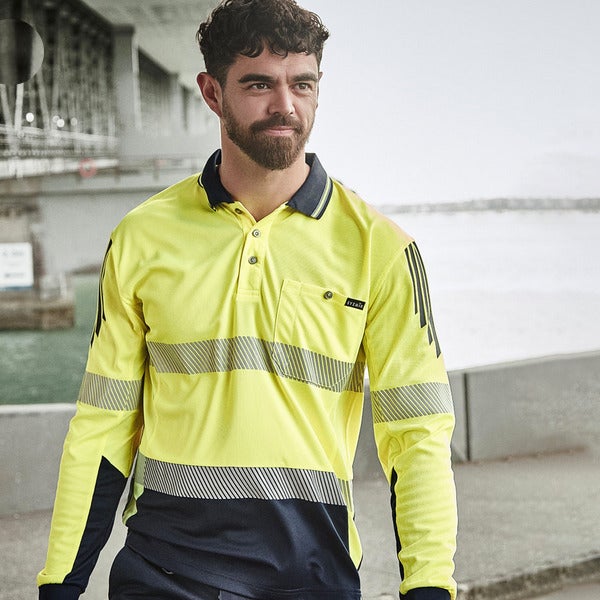
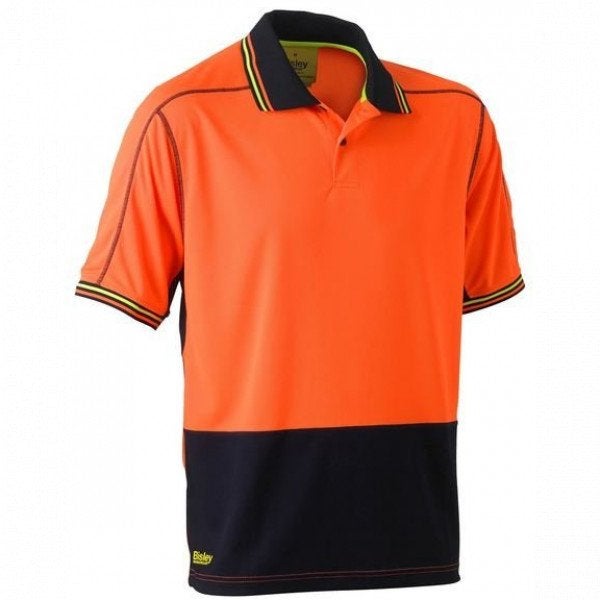
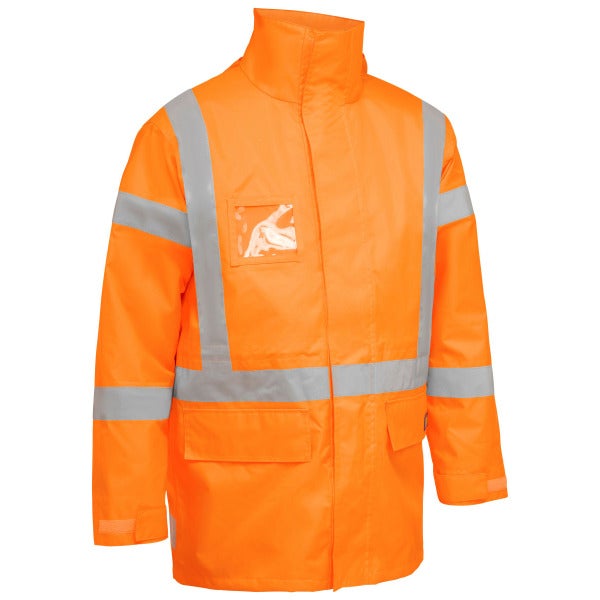
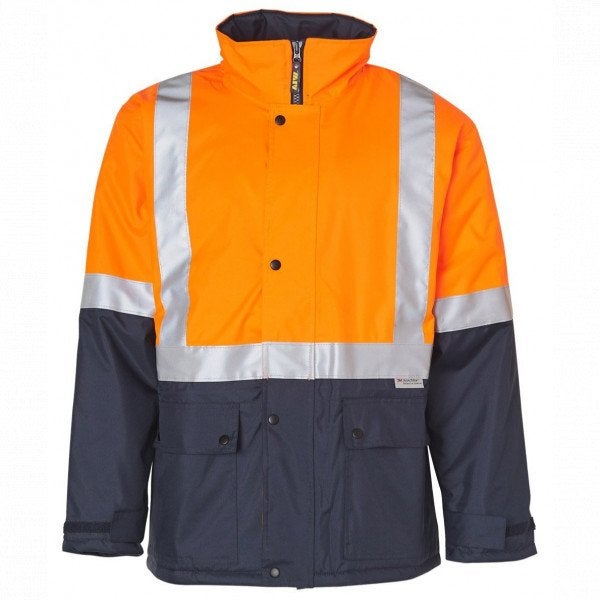
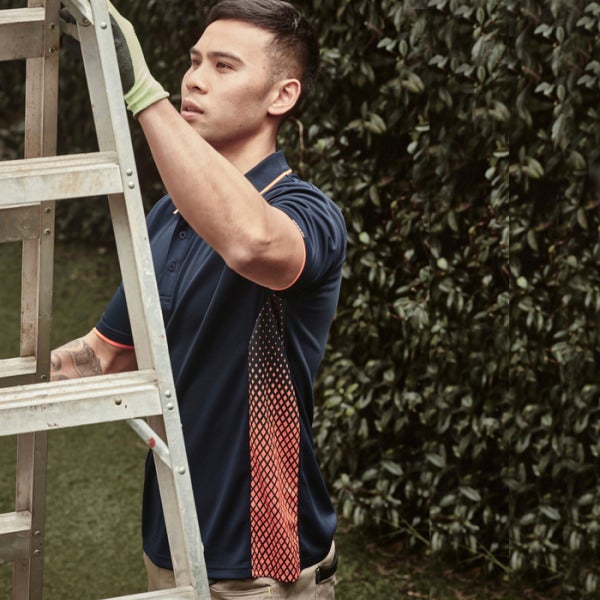
Hi-vis vests and jackets: Meets safety compliance requirements while keeping site crews identifiable across job sites.
Softshell & fleece outerwear: Cold-weather apparel that acts as an effective mobile billboard for field teams.
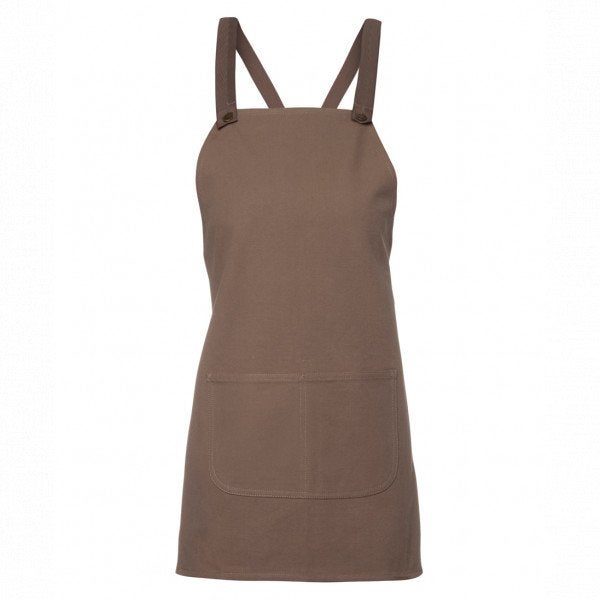
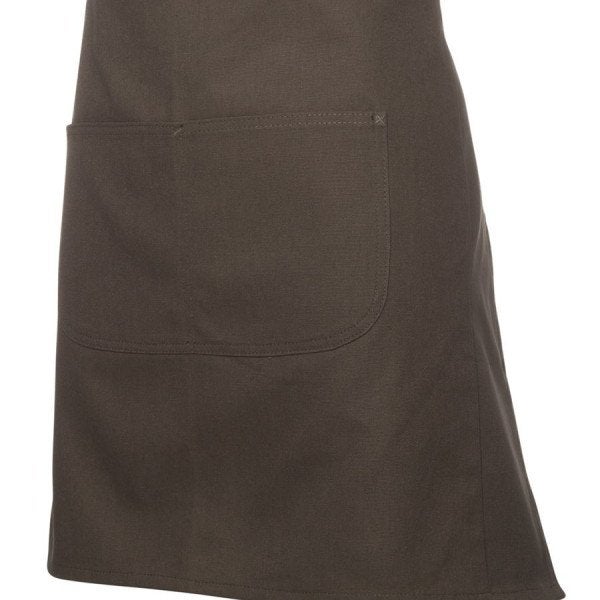
Aprons & chef coats: Sturdy threads withstand frequent high-temperature washing in commercial kitchens.
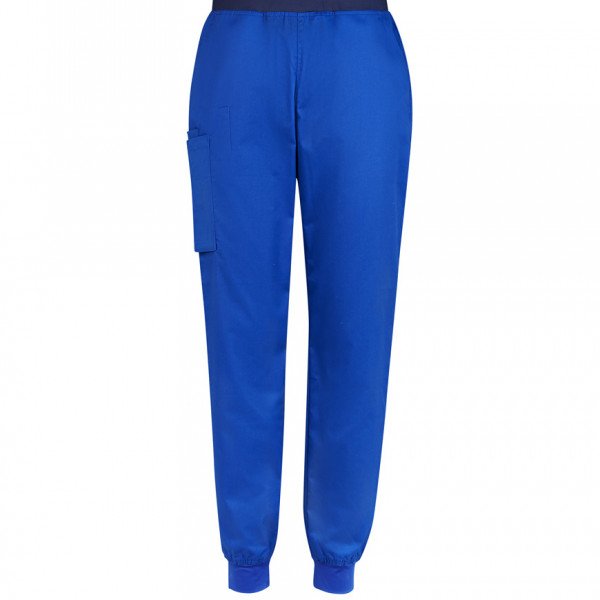
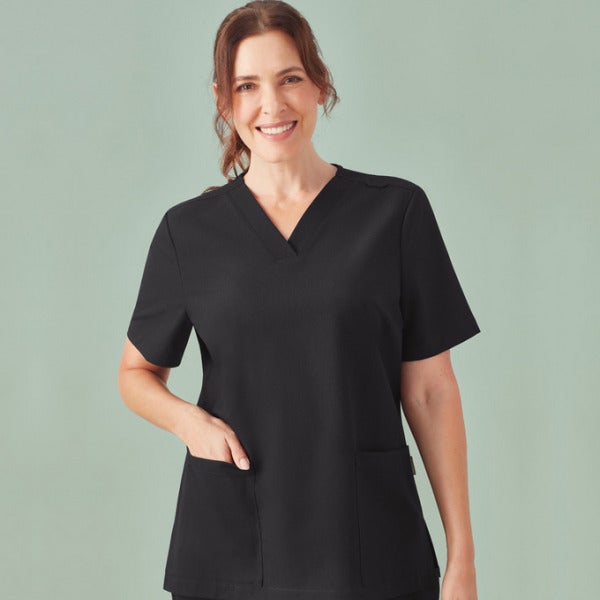
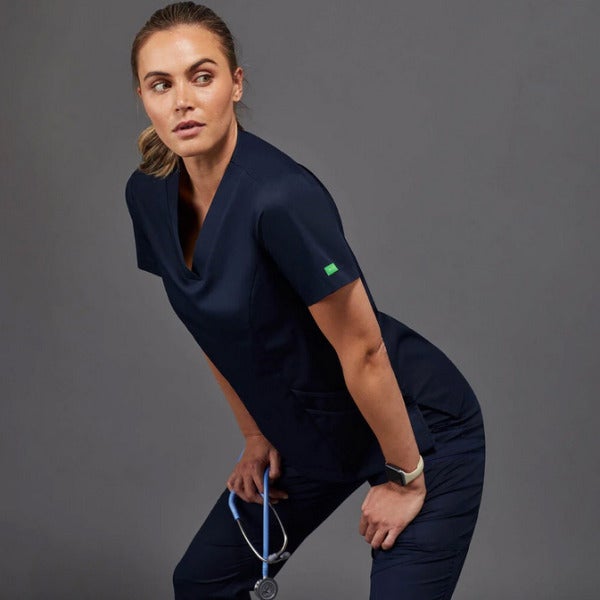
Scrubs, tunics & lab coats: Clean, reassuring branding for clinical, dental, and aged care professionals.
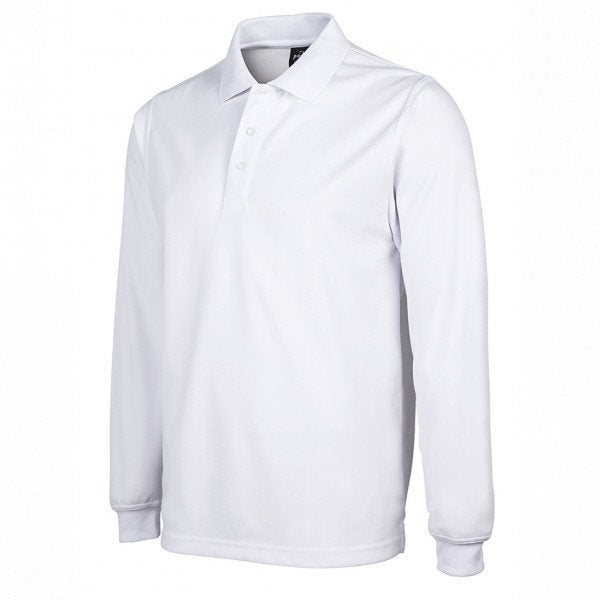
Sports polos & warm-up tops: Lightweight performance fabrics decorated with club crests or sponsor logos.
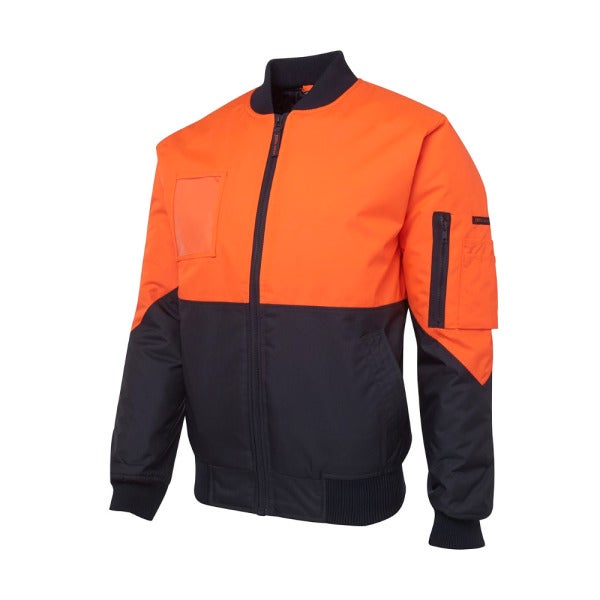
Team jackets & tracksuits: Outerwear designed for coaches, players, and supporters.
School uniforms & presentation wear: Hard-wearing stitching for academic polos, blazers, and sports kits.
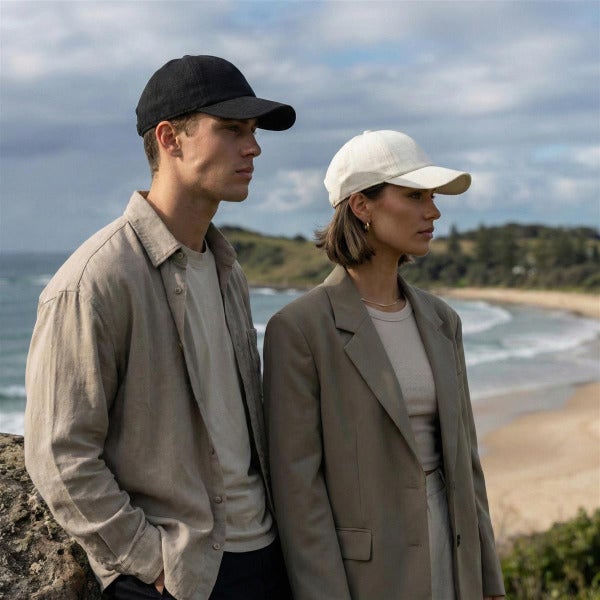
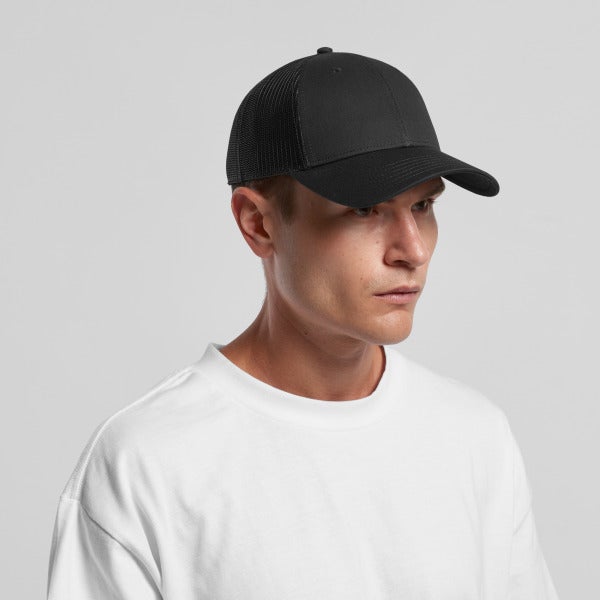
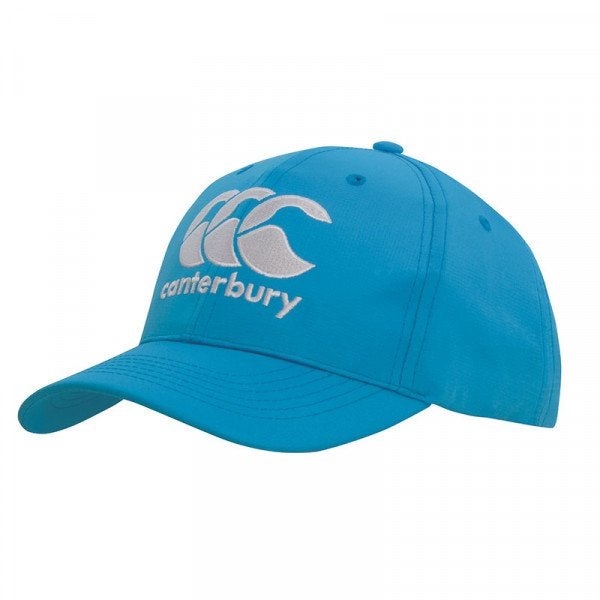
Snapbacks, trucker caps & beanies: Structured headwear provides prime eye-level brand exposure.
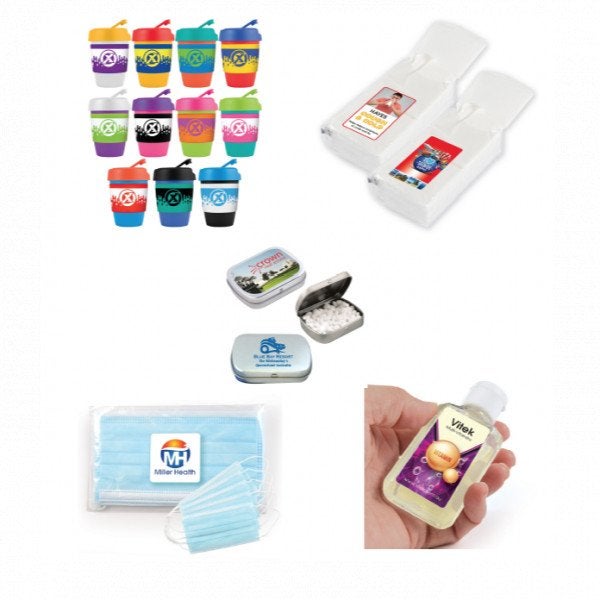
Backpacks, duffle bags & laptop sleeves: Excellent onboarding gifts for new employees or corporate merchandise.
Selecting the right embroidery placement ensures your logo looks balanced and remains clearly visible during daily work activities. Common placement options include:
Left Chest: The standard location for corporate polos, work shirts, jackets, and aprons.
Right Chest: Ideal for employee names, job titles, or secondary sponsor logos.
Sleeves (Left or Right): Perfect for secondary logos, flags, trade license badges, or website URLs.
Upper Back (Yoke): Placed just below the collar; excellent for subtle branding on jackets and business shirts.
Full Back: A bold, high-visibility option suited for workwear jackets, hoodies, and trade uniforms.
Cap Front & Sides: Centred front stitching makes headwear instantly recognizable, while side panels accommodate small icon or URL embroidery.
Apron Front: Centred on the chest bib or lower pocket panel for maximum visibility in hospitality settings.
Bag Panels: Applied to front pocket flaps or side compartments on backpacks and sports bags.
Clients often ask whether embroidery or custom printing is the better choice for work apparel. Neither method is universally superior; the ideal option depends on your garment choice, logo detail, intended use, and budget.
Consideration | Custom Embroidery | Screen Printing or Heat Transfer |
|---|---|---|
Appearance | Premium, textured 3D finish with dimensional depth. | Smooth, flat surface finish; flexible design capability. |
Durability | Exceptional; resists industrial laundering, heat, and UV exposure. | Good to high; print overlays can fade or crack over time with heavy heat drying. |
Best Garments | Polos, business shirts, hi-vis, jackets, fleece, aprons, caps. | Lightweight T-shirts, promotional singlets, large back prints. |
Fine Detail | Limited by thread thickness; text under 4mm may need adjustment. | Excellent for intricate lines, gradient shades, and small text. |
Order Suitability | Highly economical for both small top-ups and large bulk orders. | Most cost-effective on medium-to-large bulk runs. |
Personalisation | Easy to add individual staff names and roles across garments. | Possible, but setup costs are higher for single-item variations. |
Embroidery is typically the best choice for corporate polos, heavy work shirts, outerwear, headwear, and any uniform designed for long-term daily wear where durability and a professional presentation are paramount.
Printing (such as screen printing, DTF, or vinyl transfer) is better suited for lightweight T-shirts, large back designs with complex color gradients, fine photographic artwork, or short-term promotional event giveaways.
Rather than charging a flat fee per item, professional embroidery pricing is calculated based on several job-specific variables:
Stitch Count: Unlike printing (which is priced by color count), embroidery pricing depends on total stitch count. A small, simple text logo uses fewer stitches than a solid, complex emblem.
Order Quantity: Larger garment volumes reduce the per-unit cost because machine setup time is amortised across more items.
Number of Placement Locations: Embroidering a garment in multiple positions (e.g., left chest + right sleeve + upper back) requires additional hooping and machine setups.
Digitisation & Setup Fees: First-time logos require a one-off digitisation fee to create the master stitch file. Once created, this file is archived for low-cost future reorders.
Garment Type & Handling: Heavier items or awkward placements (such as cap fronts or jacket pockets) require specialized hooping frames and extra handling time.
Individual Personalisation: Adding custom staff names or titles alongside a company logo adds minor per-item setup requirements.
To ensure your embroidery order moves smoothly from design to production, follow these best practices when submitting artwork:
Supply the Best Available Logo File
Provide high-resolution vector files (.EPS, .SVG, or .AI) or clean, high-resolution PDFs or PNGs. While vector files allow technicians to inspect artwork structure easily, professional digitisers can also work from high-quality raster images.
Check Small Text and Fine Details
Because thread has physical thickness, tiny lettering (under 4mm in height) or intricate line work can fill in when stitched. Your embroidery provider can help simplify minor elements or slightly enlarge text to preserve legibility.
Select Suitable Thread Contrast
Ensure your chosen logo thread colors contrast clearly against your garment color. For example, dark navy embroidery will fade into a black polo, whereas white or silver thread provides sharp, high-contrast readability
Confirm Size and Placement
Standard chest logos are generally digitised between 70mm and 100mm wide. Caps are typically capped at 55mm high to fit structured front panels comfortably.
Including complete details in your initial enquiry helps your embroidery specialist provide an accurate quote quickly without back-and-forth delays:
Garment Quantities: Approximate number of items required (including size breakdowns if known).
Garment Style Preferences: Polos, hi-vis shirts, business shirts, jackets, caps, or aprons.
Logo File: Attach your current logo file for stitch-count evaluation.
Embroidery Placements: Specify required locations (e.g., left chest and back neck).
Personalisation Requirements: Note whether staff names or positions need to be added.
Target Deadline: State any non-negotiable event dates or uniform rollout deadlines.
Collection or Delivery Preference: Indicate whether you prefer local showroom pick-up or site delivery.
Whether your business operates in central commercial districts or surrounding industrial hubs, local uniform and embroidery specialists provide comprehensive support across Ipswich and surrounding regions.
If you require custom uniform supply or branded uniforms and embroidery services in Ipswich, service coverage includes:
Direct coverage for businesses, professional services, medical clinics, and retail stores across central Ipswich, North Ipswich, and Booval.
Servicing civil construction crews, trade contractors, logistics hubs, and manufacturing facilities located across Redbank Plains, Bundamba, and Goodna.
Local showroom support and fast order turnarounds for corporate offices, schools, and local businesses in Greater Springfield, Springfield Lakes, Camira, and Ripley.
Working with a local team for your custom workwear in Greater Springfield gives you access to a physical showroom where you can inspect fabric samples, check garment sizing, and review embroidered samples in person before committing to an order.
Custom embroidery is flexible and accommodates both small top-up orders and large corporate uniform rollouts. While single-item orders are possible, ordering in quantities of 5 to 10+ items lowers the unit cost per garment.
Yes, customer-supplied garments can often be decorated, provided the fabric weight, material composition, and construction support machine hooping and high-density stitching.
Standard production turnaround for embroidered apparel typically ranges from 7 to 10 business days following artwork proof approval and garment stock confirmation. Express production options may be available for tight deadlines.
To maximize the lifespan of embroidered logos, wash garments inside out on a cold gentle cycle using mild detergent. Avoid harsh bleaches, do not tumble dry on high heat, and iron on the reverse side of the embroidery using a pressing cloth.
Digitisation is typically charged as a one-off setup fee for new logos. Once your stitch file is created and tested, it is saved on file so future reorders incur no additional digitisation costs.
Yes, individual staff names, job titles, or department names can be embroidered on the right chest or sleeve alongside your primary company logo.
Yes, standard workflow includes providing a digital proof or swatch sample showing exact logo sizing, positioning, and thread colors for your formal approval before machine production starts.
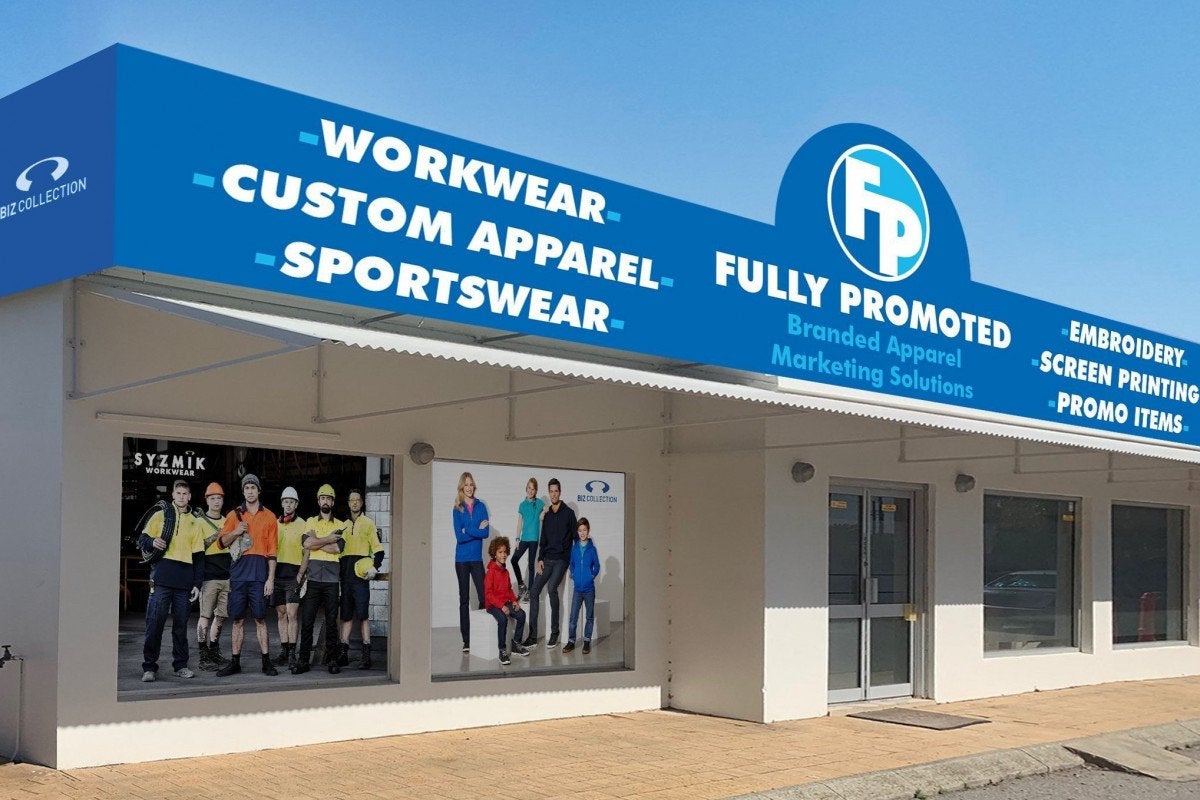
Ready to elevate your team’s presentation with high-quality custom embroidery? Fully Promoted Springfield supplies professional branded uniforms, trade workwear, safety apparel, headwear, and corporate merchandise for businesses across Ipswich and Greater Springfield.
Ready to order? Request a free quote from Fully Promoted Springfield today.
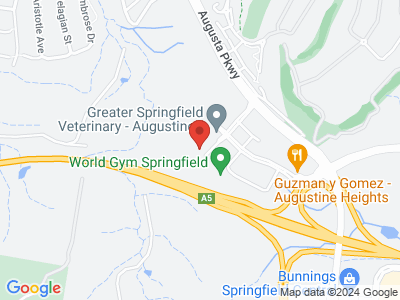
Fully Promoted Springfield
The Business Hub, Unit 5 23 Technology Drive
Augustine Heights Queensland 4300




Create exactly the look you want with a variety of branding options. Our experts can help you discover which techniques will best represent your brand and your budget.
Whether it’s embroidery for your garments, screen printing for a run of apparel, or the latest in branding technology with direct to transfer printing, Fully Promoted has you covered.
Contact Fully Promoted today.



Join our winning team and own your future with
Fully Promoted - the largest promotional franchise
in Australia.
Apply Today!
>



 Industries