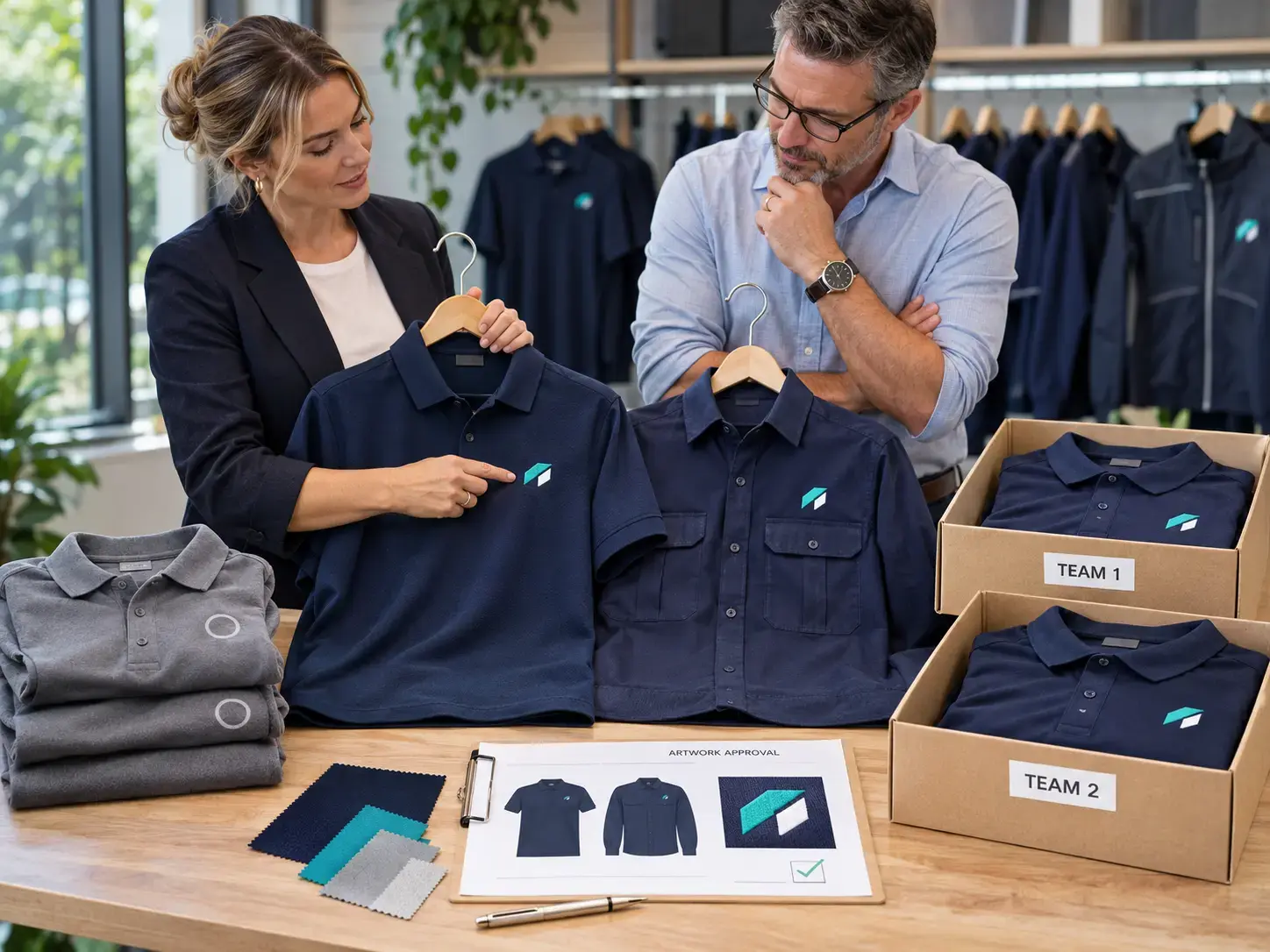
Your new logo is approved, your website is being updated, and the signage is on its way. Then someone asks: what happens to the uniforms?
Uniform rebranding needs its own plan. Replacing everything immediately may put pressure on your budget, while allowing old and new clothing to circulate indefinitely can leave customers seeing two different business identities.
A staged rollout gives you a practical middle ground. Start with a stock audit, confirm the new garment and branding specifications, test them with staff, then replace uniforms in clearly defined groups.
For businesses in Tingalpa and Brisbane’s eastern suburbs, the aim is straightforward: introduce your new identity while keeping employees properly equipped for their everyday work.
A phased uniform rollout is worth considering when you have several departments, usable existing stock, different garment requirements or a budget that needs to be spread across purchasing stages.
However, staging should still have an end date. “Replace items whenever they wear out” can leave an outdated logo in circulation for years.
A coordinated changeover may be more appropriate when your business name changes completely or customers could mistake the old identity for a separate company.
Before ordering, answer three questions:
Which employees must wear the new branding at launch?
Which existing garments can remain temporarily?
When must the old identity disappear from customer-facing use?
These decisions establish the boundaries for every stage that follows.
Count what you already own before deciding what to replace.
Include garments employees wear, unopened stock, seasonal outerwear, caps, aprons and clothing kept in vehicles. A new polo achieves little if staff cover it with an old-logo jacket during customer visits.
Create a simple register showing:
Record | What to capture |
Garment | Brand, style code, colour and fit |
Quantity | Issued garments and unused stock separately |
Condition | Serviceable, damaged or ready for replacement |
Branding | Old logo positions and decoration method |
Decision | Retain temporarily, assess for alteration or replace |
Separate plain garments from branded items. Suitable unbranded stock may still work with the new identity, subject to the supplier checking its condition and decoration compatibility.
Complete this stage when: every garment category has an agreed treatment, including clothing that is easy to overlook.
A logo file alone is not a production brief.
Your supplier needs to know which garments you want, who will wear them, where the branding belongs and which artwork version has approval.
Prepare one master specification covering:
Garment brand, style, colour and available fits.
Approved logo file and version.
Finished logo dimensions and placement.
Agreed print or thread colour references.
Staff names or role descriptions, where required.
Who can approve artwork and substitutions.
Different teams can wear different garments while sharing a consistent identity. Reception staff may need business shirts, while delivery staff need polos and practical outerwear.
For branded workwear in Brisbane, consider the actual working environment, including outdoor duties, frequent movement and time spent in vehicles. Keep relevant workplace clothing requirements in the brief.
Complete this stage when: one approved specification replaces scattered emails, screenshots and verbal instructions.
Use the rebrand to check whether your current uniform still suits the job.
Ask staff what creates difficulties: restricted movement, uncomfortable collars, unsuitable pockets or garments that are awkward to maintain. Then assess samples against those specific problems.
Where samples are available, have employees try the actual style being considered. Record sizes against its style code rather than assuming their current size transfers to another range.
Check the decorated result too. Review:
Whether the business name is readable.
Whether the logo sits correctly when worn.
How the decoration feels against the garment.
Whether the colour combination works in ordinary lighting.
Whether care instructions suit your workplace routine.
A digital proof helps confirm layout. A physical decorated sample, where available, lets you assess the finished material and branding together.
Complete this stage when: the agreed garment, sizing approach and decorated appearance have approval.
Phasing purchases changes when money is spent. It does not automatically reduce the total cost.
Several small orders may involve different unit prices, additional freight or repeated preparation charges. Compare the proposed stages with a consolidated order before committing.
Ask for a quote that identifies garments, decoration positions, artwork preparation, samples, delivery and GST. Include replacement needs and planned new starters in your own budget.
Build the schedule around confirmed dependencies:
Garment and size availability.
Final artwork approval.
Sample assessment, if required.
Production arrangements.
Delivery or collection.
Staff distribution before the first wearing date.
Ask whether a quoted date means dispatch or arrival. Leave enough time to check the order before issuing it.
Complete this stage when: the budget covers the whole transition and the supplier has confirmed what must happen before each delivery.
Choose groups that can change over coherently. Depending on your business, that might mean one branch, one department or one complete customer-facing team.
Avoid giving a few employees new uniforms simply because their sizes arrived first. If they work alongside colleagues wearing the old identity, the transition can look accidental.
The following is an illustrative sequence, not a supplier delivery commitment:
Phase | Group or items | Condition for moving forward |
Pilot | Representative staff from relevant roles | Fit and branding issues resolved |
Launch | Customer-facing team and visible outerwear | Complete approved allocations received |
Expansion | Remaining departments or locations | Previous distribution checked |
Closeout | Accessories, spares and old stock | Old-logo items accounted for |
Customer visibility is one factor. Garment condition and operational needs matter too. Someone working behind the scenes should not wait for an essential replacement merely because their role is less visible.
Complete this stage when: each group has an owner, a target changeover date and a clear readiness condition.
Tell employees what is changing before customers start asking about it.
A short staff briefing should explain the new identity, which garments are approved, when the change applies and who handles sizing problems.
Make the temporary rules specific. For example, clarify whether an old jacket can be worn with a new polo during the transition. If it cannot, ensure suitable replacement outerwear is ready.
Give staff a straightforward way to report problems privately. An employee who cannot obtain a suitable fit needs a practical resolution rather than repeated reminders about presentation.
Managers should receive the same instructions so different shifts do not invent different rules.
Complete this stage when: employees know what to wear, when to start and how to resolve an issue.
Check deliveries against the approved order before handing items out.
Verify quantities, style codes, sizes, logo versions and any personalised names. Resolve discrepancies while the order details are easy to trace.
Record what each employee receives. Include outstanding items and the person responsible for following them up.
Then deal with the old uniforms. Depending on their condition and your business requirements, options may include controlled internal use, assessment for alteration, or a suitable textile collection route.
Do not assume existing embroidery can be removed cleanly or a printed logo can be covered successfully. Ask the decorator to assess the garment first.
If donation or recycling is proposed, confirm the receiving organisation accepts the items. Branded clothing also needs consideration where it could allow someone to appear associated with your business.
Complete this stage when: new allocations are recorded and old-logo stock has an agreed destination.
Uniform rebranding continues after launch whenever someone joins, changes size or needs a replacement.
Retain a master record of the approved garments, artwork, decoration positions and colour references. Include photographs of accepted finished samples where possible.
Agree on a substitution process before a favourite style becomes unavailable. A replacement should be assessed for fit, colour and branding compatibility rather than ordered on appearance alone.
Ask our Tingalpa team whether a customised uniform and merchandise ordering portal would suit your business. Confirm how approved garments, artwork and ordering permissions would be managed before introducing it to staff.
A shared specification remains useful even when orders are handled through a portal. It gives everyone a consistent reference.
Review the new uniforms after staff have worn and cared for them through a normal working cycle.
Ask focused questions: can employees move comfortably, are allocations sufficient for their roster, and are any old-logo items still appearing?
Track practical measures such as:
Employees who have received their complete allocation.
Outstanding size exchanges or missing items.
Spending against the approved budget.
Departments that have completed the changeover.
Reorders placed using the approved specification.
These checks show where action is needed. They are more useful than assuming the project succeeded because the first delivery arrived.
Not necessarily. A phased approach can suit different departments and purchasing needs. Set a final changeover date, and keep each customer-facing team visually coordinated during the transition.
Sometimes, suitability depends on the garment, existing decoration and proposed method. Request an assessment before including rebranding or logo removal in your budget.
Start before announcing a clothing changeover date. Stock, sizing, artwork approval, samples and production all influence the schedule. Ask for timing based on your actual requirements.
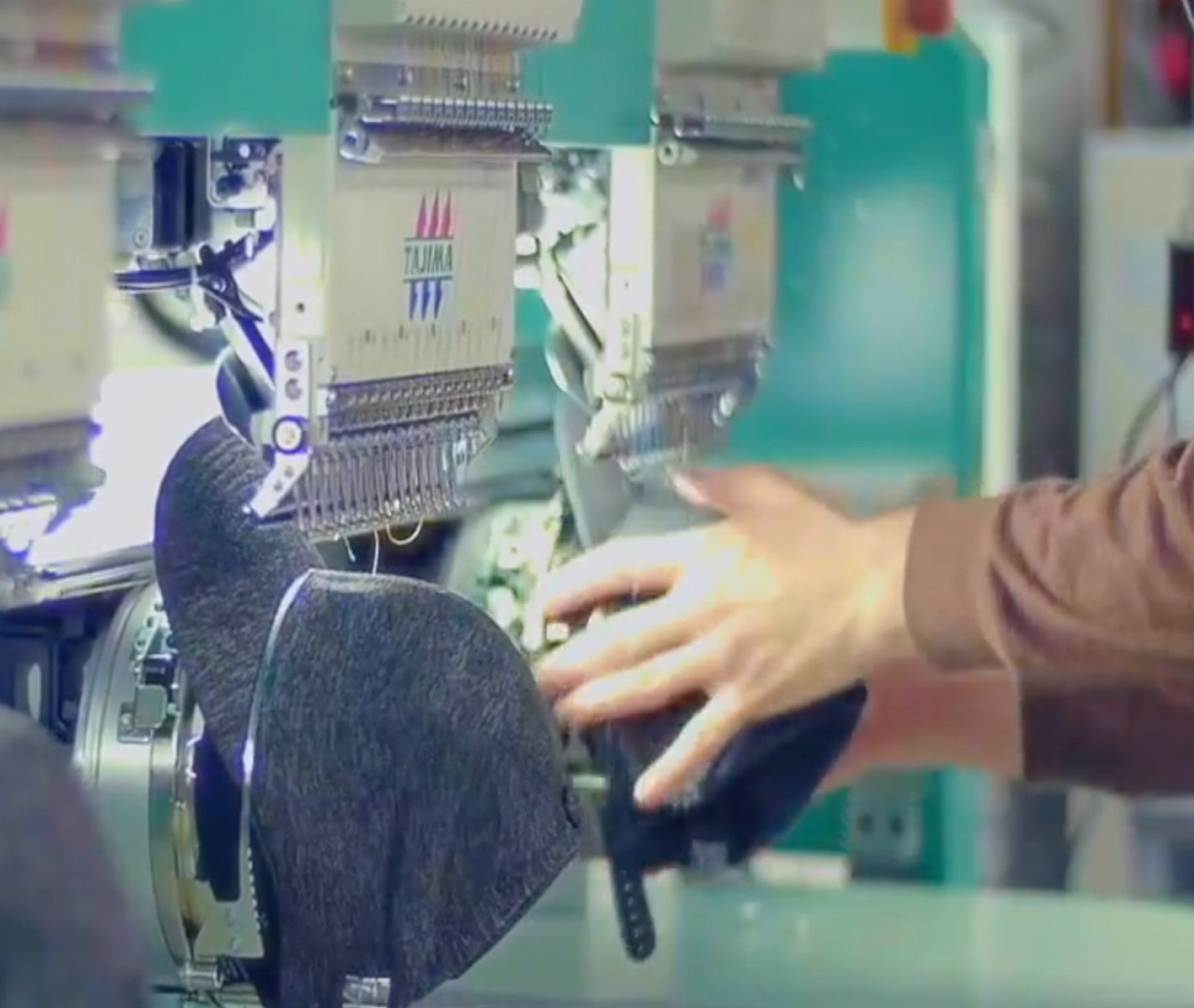
Choose the method around the garment, logo detail, order quantity and intended use. Embroidery, screen printing and DTF produce different finishes, so assess the proposed method on a suitable sample before approving production.
Fully Promoted Tingalpa supplies custom uniforms, branded apparel and promotional products, with embroidery and printing options for local businesses.
Bring your new artwork, current garment details, staff numbers and preferred changeover date to the discussion. These details help us assess suitable garments, plan the order stages and prepare an itemised quote.
For help planning custom uniforms for your businesses, contact Fully Promoted Tingalpa.
Call: 61 7 3371 8045
Visit: 24D/1631 Wynnum Road, Tingalpa, Queensland 4173.
A well-managed transition starts with an approved specification and finishes when every team has the right garments, the old identity is accounted for, and future orders follow the same plan.
Create exactly the look you want with a variety of branding options. Our experts can help you discover which techniques will best represent your brand and your budget.
Whether it’s embroidery for your garments, screen printing for a run of apparel, or the latest in branding technology with direct to transfer printing, Fully Promoted has you covered.
Contact Fully Promoted today.















Join our winning team and own your future with
Fully Promoted - the largest promotional franchise
in Australia.
Apply Today!
>



 Industries